Originally published on 1st March 2021. Fully updated as of 21st May, 2026.
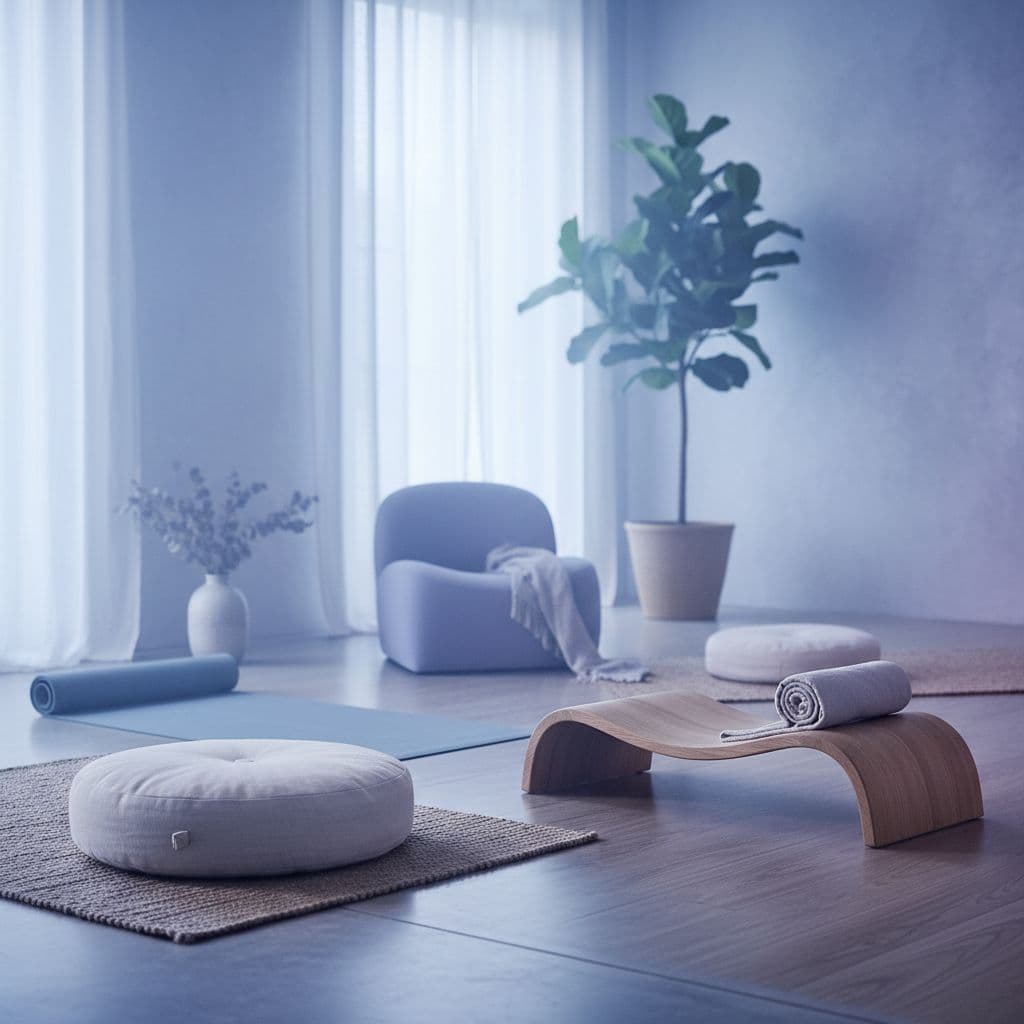
Meditation furniture is any seat, cushion, bench, mat, or support item used during practice. It helps the body feel comfortable and settled. The right setup can make a real difference to how supported the body feels — and how inviting the space feels to come back to regularly.
This guide walks through the main types of meditation furniture. It covers chairs, cushions, benches, and mats, and what to look for when choosing between them. Topics include posture support, back and knee comfort, space, and session length. That way you can find what genuinely works for your body and your practice.
There is no single perfect setup. A good meditation space often grows gradually. Pieces are added over time as your practice and preferences develop.
Key takeaways
Meditation furniture helps support the body during practice — whether seated, kneeling, lying down, or in a chair.
Choosing your setup depends on your body’s needs, the space you have, and how long your sessions run.
Chairs, cushions, benches, and mats each support different postures and practice styles.
Posture and comfort matter more than aesthetics when selecting the right pieces.
Your setup doesn’t need to be built all at once — it can grow gradually as your practice develops.
What is meditation furniture?
Meditation furniture is any item that helps support the body and encourage a comfortable, settled position during practice. It is not limited to floor-based sitting. Your setup can look very different depending on your body, your posture preferences, and the meditation style you use.
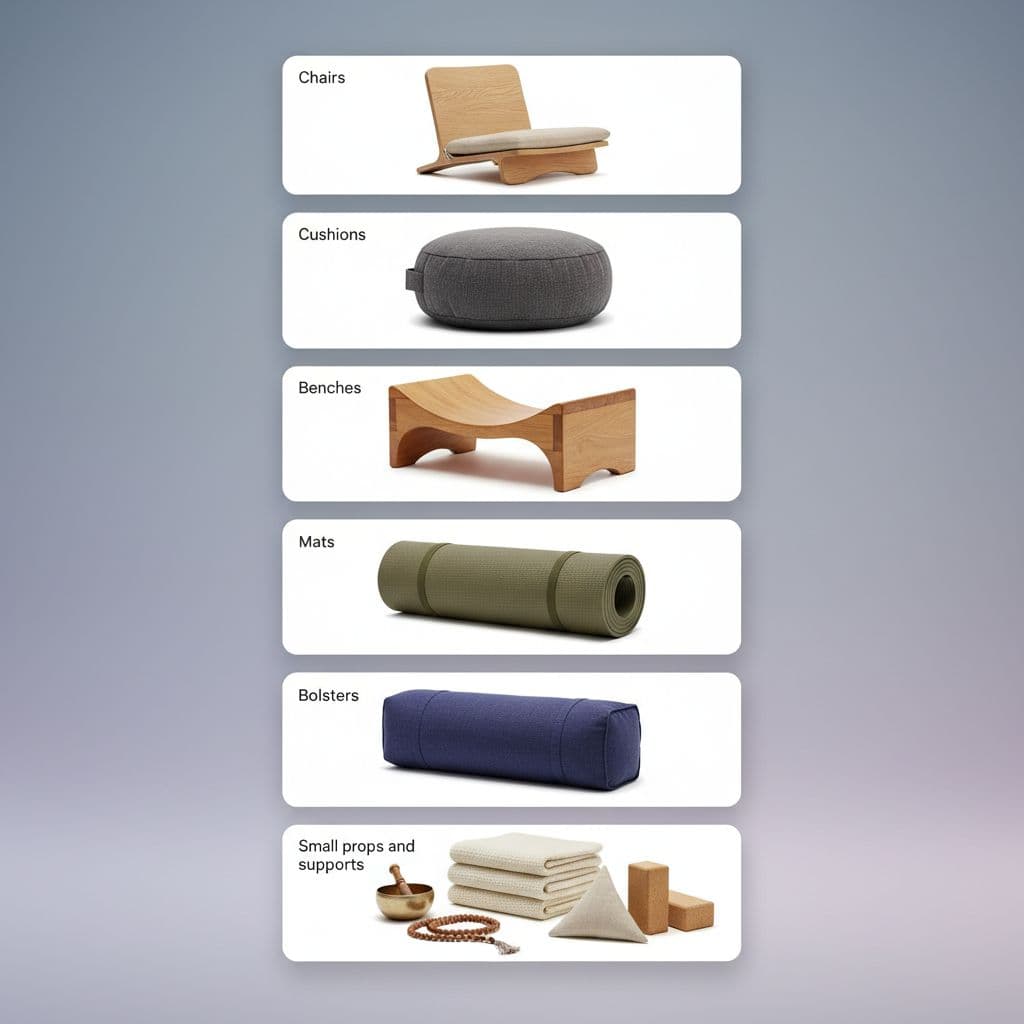
Common pieces include:
Chairs
Cushions
Benches
Mats
Bolsters
Folded blankets
Small props and supports
Why does meditation furniture matter?
Physical discomfort can be one of the biggest distractions during practice. Numb feet, a sore back, or an unsupported posture can pull focus away quickly.
The right furniture helps reduce that strain. It supports the body so attention can stay with the practice rather than fighting discomfort.
Good posture also matters beyond stillness. For breathwork, an aligned and supported position allows for better breathing and energy flow throughout the body.
A well chosen setup can make a real difference to how settled and at ease the body feels — session after session.
How much space do you need for meditation furniture?
Your setup does not need a dedicated room or a large area. A small quiet corner can work just as well.
A simple cushion and mat may be all the space you need. Foldable pieces are also a great option for tighter spaces — easy to set up and easy to store away.
Keeping the area calm and uncluttered can help too. A clear space feels more inviting and helps settle the mind before practice even begins.
Does your meditation furniture need to be portable?
Some people prefer to practise in the same spot every day. Others move between rooms or take pieces with them when travelling.
If portability matters, weight and packability are worth considering. Lighter cushions and foldable benches are easy to move around. Some pieces pack away in seconds, which makes them practical for smaller homes too.
Your setup should work for your lifestyle — not just your practice space.
Think about session length
A shorter practice asks less from the body. A basic cushion or simple seat is often enough for a 10 to 15 minute session.
Longer practices are different. The body needs more support over time. Better back support, a firmer lift, and additional padding under the knees and ankles can all help maintain comfort and alignment throughout.
Although in saying this, the right setup supports your practice whether it runs for 10 minutes or an hour.
Main types of meditation furniture
There are a few main categories to choose from. You don’t need all of them. Your setup simply needs the pieces that match your body, your practice style, and the positions that feel most natural to you.
Here is a quick comparison to help narrow it down.
Type | Best For | Main Trade-off |
Chair | Upright support and back alignment | Can take up more space |
Cushion | Hip lift and posture support | Not ideal for every knee or back |
Bench | Kneeling and forward pelvic tilt | Often needs a mat too |
Mat and Cushion | Foundation for floor practice | Adds different comfort levels as a set |
Meditation chairs
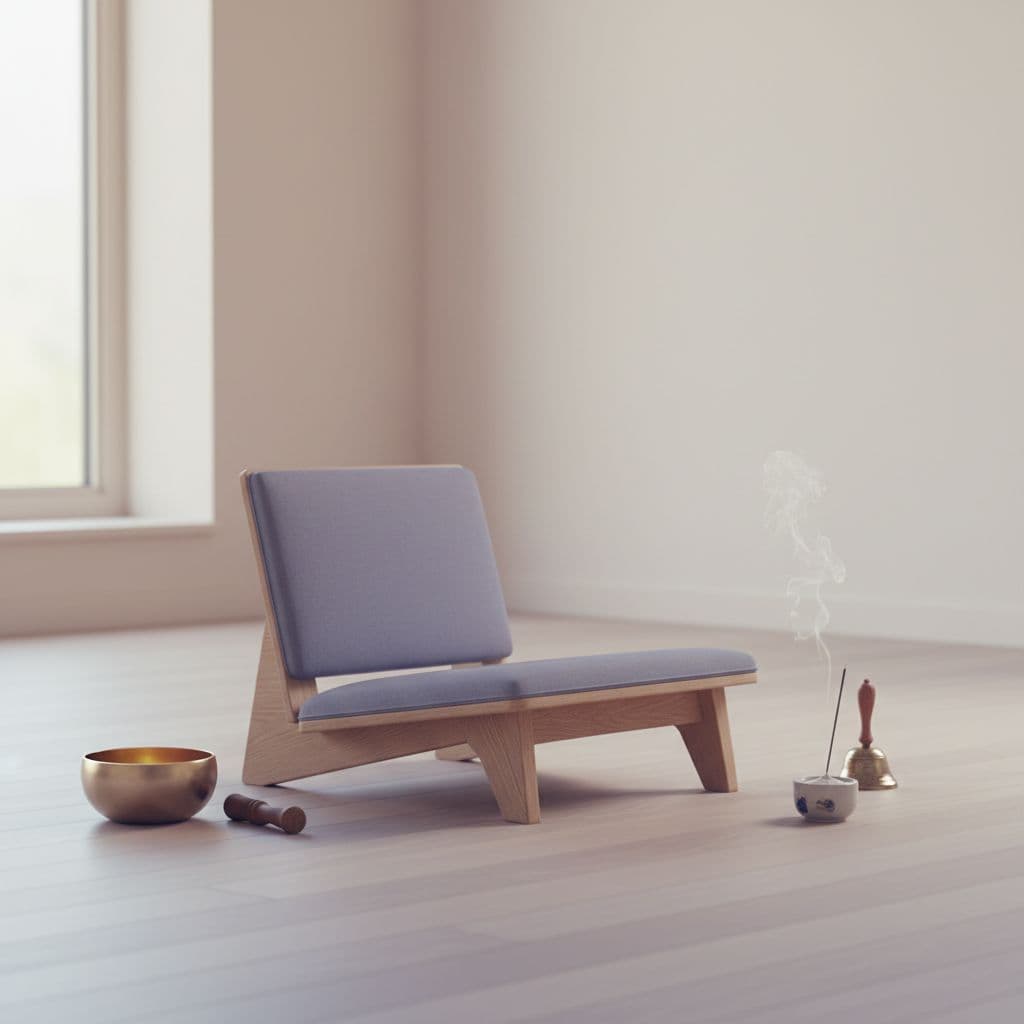
A meditation seat or chair is a practical choice for those who want upright support without being on the floor. The ergonomic design helps support the back, hips, and knees — making it a good option for those who find floor-based practice uncomfortable.
Chairs work well for a range of practice styles. Both feet stay grounded, joint pressure is reduced, and the spine is naturally encouraged into better alignment.
This is the short overview. For a more detailed look at styles, features, and what to look for, our dedicated guide to meditation chairs covers everything in one place. For a broader comparison of chairs against cushions and benches, this guide on choosing meditation chairs is also worth a read.
Meditation cushions
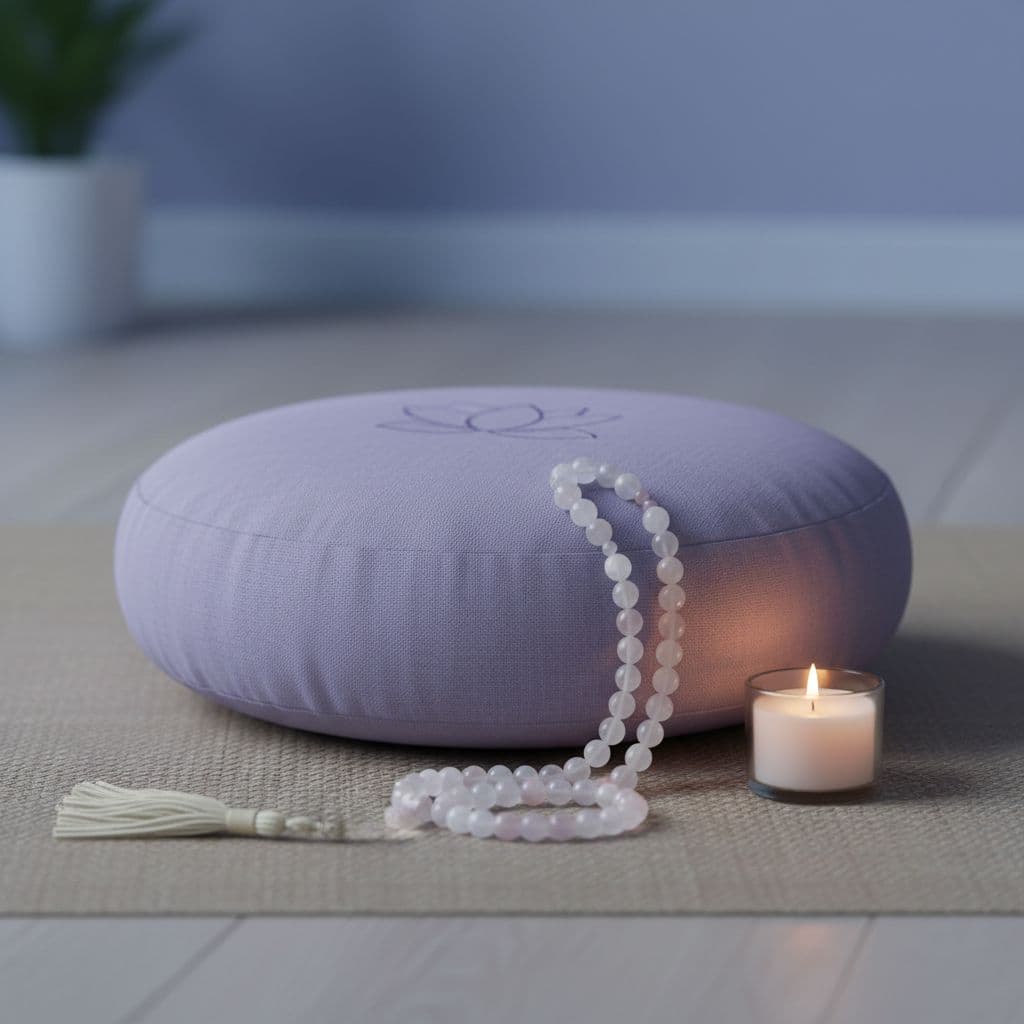
Meditation cushions are usually designed to raise the hips and encourage the spine into a more natural alignment. This makes it easier to maintain a comfortable and stable position during practice.
The round style, often called a zafu, is widely used and works well for a range of postures. Height, firmness, and shape matter more than looks. Not every cushion works for every body.
Support cushions come in a variety of styles, shapes, and sizing are covered in full in our dedicated meditation cushion guide. Calm’s overview of meditation cushion types is also another helpful read.
Meditation benches
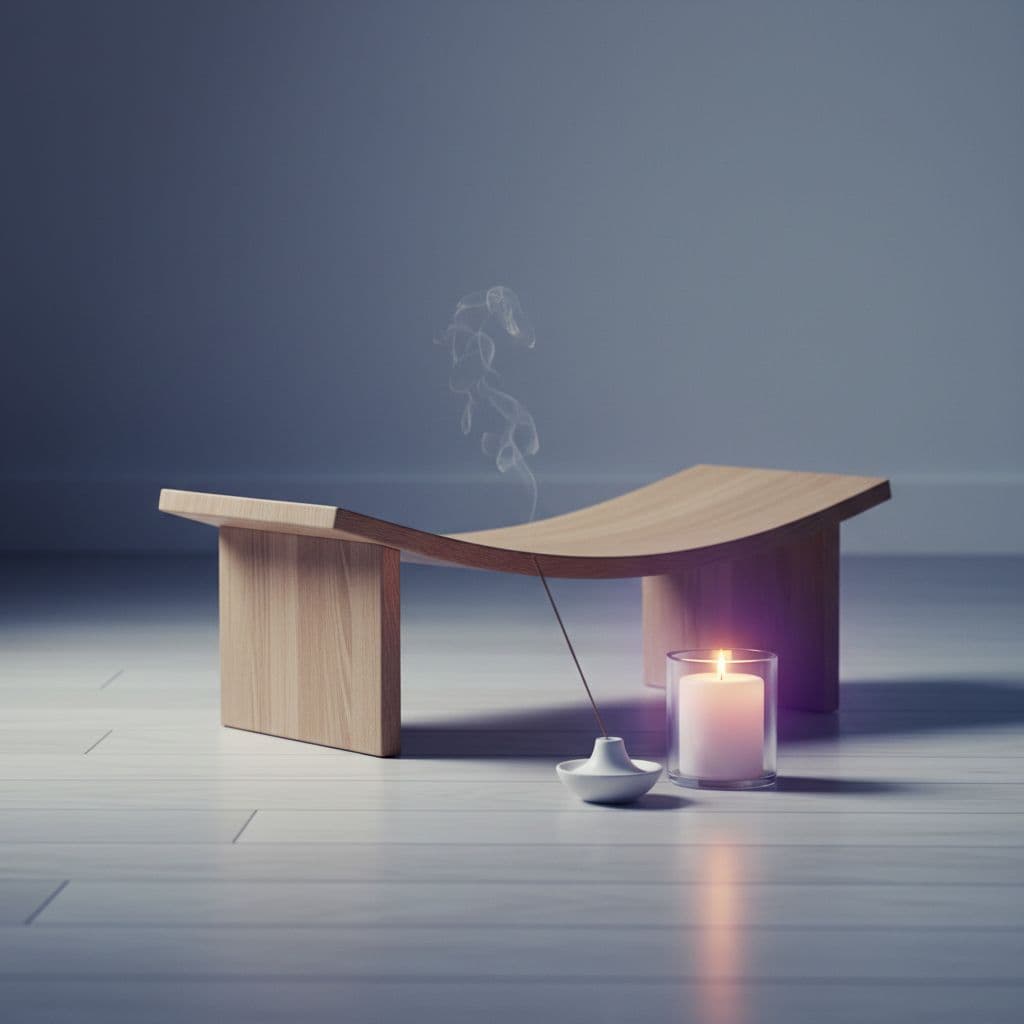
Meditation benches are designed primarily for kneeling postures. It shifts pressure away from the ankles and encourages the pelvis to tilt forward naturally — supporting a more comfortable and upright position during practice.
For those who enjoy floor-based practice but need more support, a bench can be a helpful middle ground between a cushion and a chair. It is worth exploring before moving away from floor practice altogether.
Mats and meditation tools
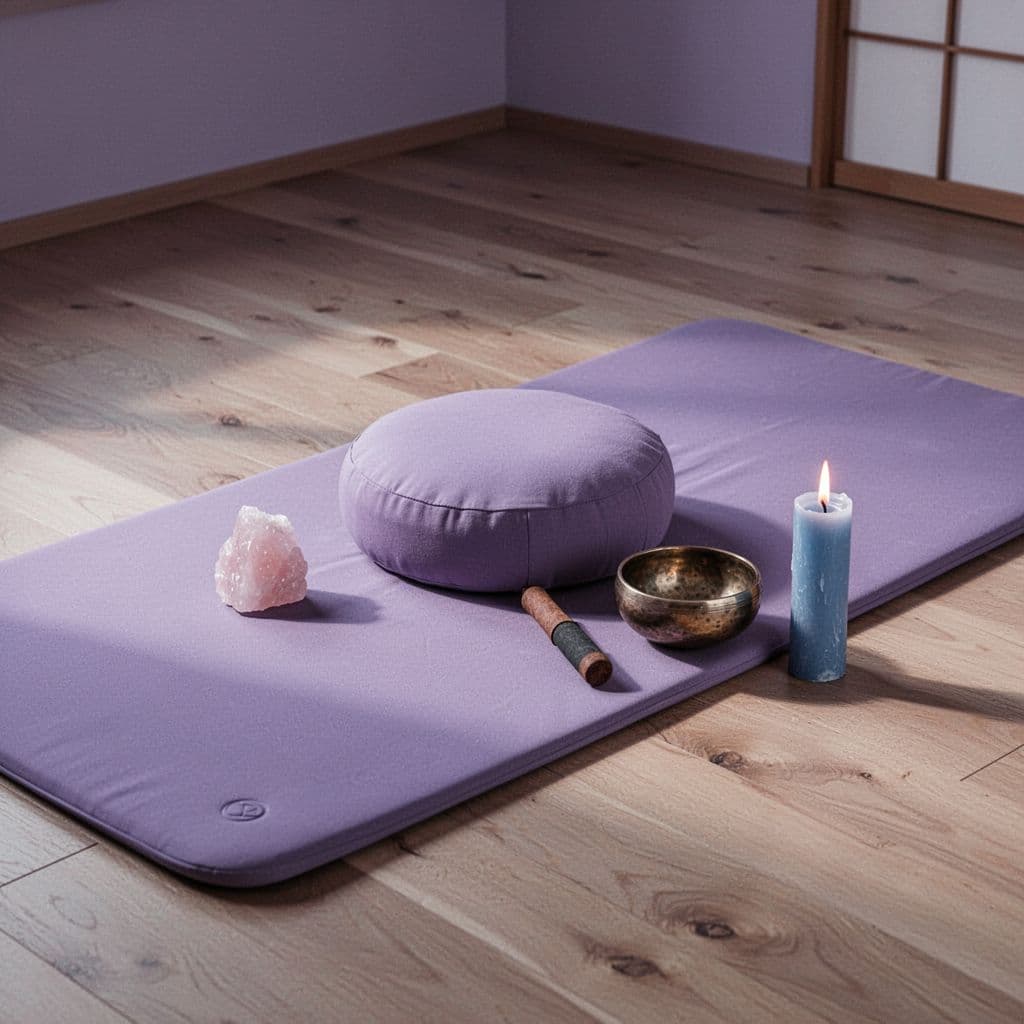
Mats and meditation tools support the body and help create a more comfortable and intentional practice space. A traditional padded mat, known as a zabuton, softens the floor and protects the knees and ankles during practice.
Some meditation mats come as a set with a cushion, depending on the style you choose. This can be a practical and cost effective option worth looking out for.
The mat itself is also multifunctional. It can be used for lying down during restorative routines or body scan practices, making it a versatile addition to any practice space.
Blankets and yoga bolsters can also add extra comfort and support where the body needs it most.
Beyond physical support, crystals, singing bowls, meditation gongs, candles, and other mindful accessories can help create a more intentional and meaningful practice. Here’s our full guide on meditation tools, which covers this more in detail.
How to choose the right setup
Pulling it all together comes down to a few simple questions. Use these as a quick checklist before making any decisions.
Does floor sitting feel comfortable?
Do the knees or hips need more support?
Is back support important?
How long are your sessions?
How much space is available?
Do you need something portable or easy to store?
The answers will naturally point toward a cushion, a bench, a chair, or a simple mix of pieces. There is no single right answer — only what works best for your body and your practice.
Meditation furniture for different needs
Every body is different. The right piece depends on comfort, posture needs, and the style of practice that feels most natural.
For beginners
Starting simple is often the best approach. A cushion and mat, or a supportive chair, is enough to begin with. There is no need to invest in everything at once. A practice space can grow gradually as preferences become clearer.
For back support
A chair with a built-in backrest or a firm cushion that lifts the hips can help if the back tires quickly. A kneeling chair may also be worth exploring — it encourages better spinal alignment and allows the breath to move more freely.
For those who prefer chair based practice
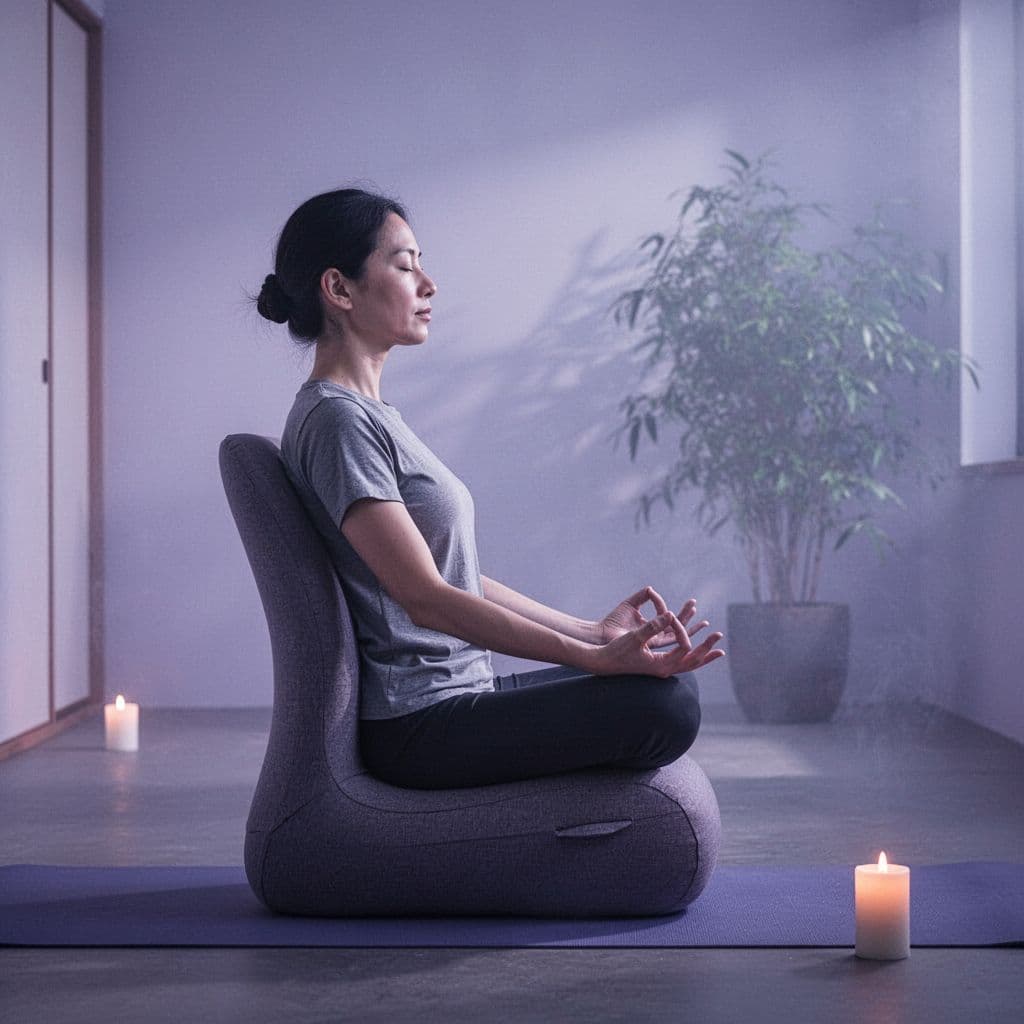
Chair based practice is a completely valid and comfortable option. A dedicated meditation chair with ergonomic support can make a significant difference to posture, comfort, and how long a session feels sustainable.
What to check before you buy meditation furniture
Before making any decisions, a quick reality check goes a long way. The basics matter more than style or aesthetics.
Furniture for meditation covers a broad range of price points depending on materials and construction, including any handcrafted options.
Prices can start from around $30 for basic cushions and rise to $150 or more for ergonomic benches or specialised chairs.
Spending more often means firmer, longer lasting materials that hold their shape better over time. That said, the right piece is simply one that feels comfortable and suits your practice.
Does the construction feel stable and sturdy?
Wobble is a deal-breaker. A bench should feel planted.
A chair should not shift or tip when you adjust.
A cushion should be firm enough to hold its shape instead of flattening into the floor.
Check materials, covers, and care needs.
Buckwheat hulls, natural wood, dense foam, and organic cotton covers are all common choices.
What matters most is whether the material feels good to use and whether it is easy to clean and maintain.
Eco-friendly materials like organic cotton are breathable and gentle against the skin — worth considering for daily practice.
For those with allergies to buckwheat, alternative fillings such as kapok, memory foam, or cotton batting are widely available and may work just as well for posture support. Always check the products reviews on the things that are most important for you.
Does the size and height work for your body?
Height and width change everything.
A cushion that sits too low may tilt the pelvis back.
A bench that is too narrow may feel cramped.
A chair that is too soft may pull the spine into a slump.
Where possible, test before buying. If not, check the measurements carefully against the position that feels most natural and comfortable for your body.
Other helpful meditation tools
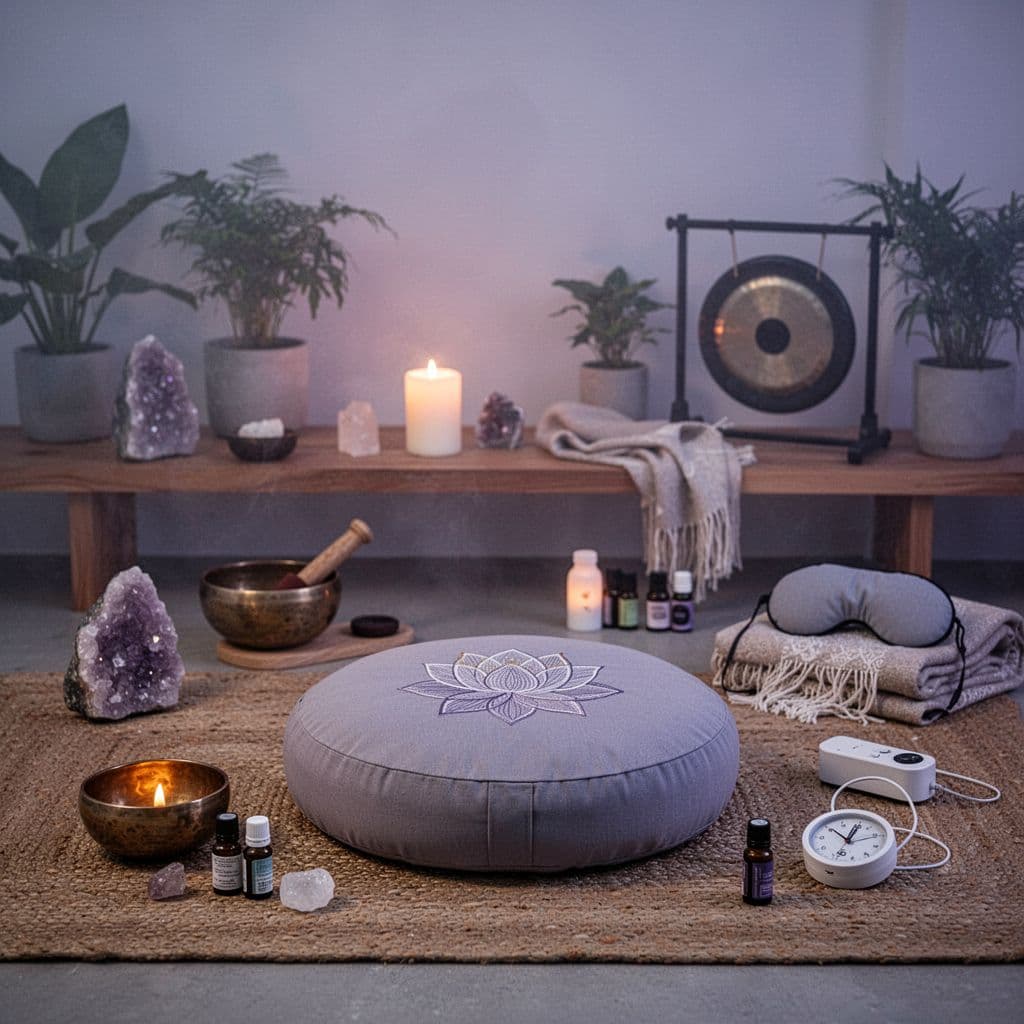
Other helpful meditation tools go beyond furniture and can make a real difference to how meaningful and consistent a practice feels.
Crystals — natural elements from the earth, often used to connect with earth’s energy and set a deeper intention for practice
Singing bowls — used to mark the beginning or end of a session with sound
Meditation candles — create a warm and focused atmosphere during mindfulness practice
Timers — keep track of session length without clock watching
Gongs — a gentle sound signal for transitions between practice stages
Meditation shawls — add warmth and comfort during longer or restorative practices
Eye pillows — encourage deep relaxation during lying down or restorative practice
Aromatherapy and essential oils — create a calming and consistent sensory environment
Breath pacer tools — support rhythm and focus during breathwork and pranayama
These tools are there to enrich the practice — creating your sacred space, intentional and deeply personal to you.
FAQ
What is the best meditation furniture for beginners?
Starting simple is often the most practical approach. If floor-based practice feels comfortable, a firm cushion and mat can create a solid foundation. If not, a supportive chair is a practical and accessible place to begin. The most important thing is finding a position that feels comfortable enough to come back to regularly.
Can I meditate without any furniture?
Yes — some people practise comfortably without any dedicated furniture at all. A folded blanket, a regular chair, or simply a clear space on the floor can be enough. Furniture is there to support comfort and posture, not as a requirement for practice.
What should I use for a home meditation space?
A dedicated room isn’t always possible when it comes to having a home meditation space. A quiet corner, one seat, and a mat or blanket is often all that is needed. Just a space that feels calm, clear, and easy to return to.
Do I need a meditation cushion or a chair?
Neither is better than the other. It comes down to what feels right for your body when doing breathwork. A cushion works well for those who feel comfortable in floor-based positions. A chair may suit those who prefer more back support, easier alignment, or less pressure on the knees and hips.
Final thoughts
Choosing your meditation furniture setup is a personal journey. One that’s different for each and every one of us. It depends on the style of meditation you practice and your individual comfort needs as well the duration of each session.
And, meditation accessories are about creating your sacred space. One that feels intentional, inviting, and worth coming back to again and again.
If you are still exploring, here’s some of our guides that go deeper into each area:
So what feels right for your own meditation space — a chair, a cushion, a bench, or a mix of a few simple pieces?