Written on 21st June, 2023. Updated on 7th July, 2026.
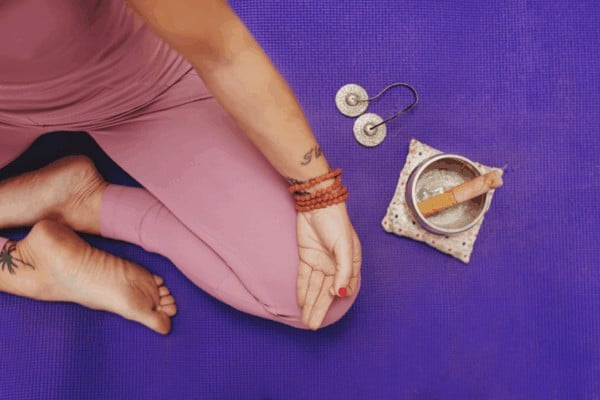
Meditation doesn’t need to feel perfect to be worth doing. If your mind wanders, your legs get restless, or you keep wondering if you’re doing it right, you’re in normal territory as a beginner. This is exactly where meditation tools for beginners come in.
Without any support, it can be hard sometimes to settle into a meditative state, especially if you’re just starting out. I remember feeling that way as a beginner years ago.
That’s why meditation tools can be helpful. Not because you need a pile of gear, but because a few simple supports can make your mindfulness meditation practice feel more comfortable and less distracting. It’s about helping you build a practice you’ll love and stay consistent with.
Quick takeaways
- Start small, one or two tools is plenty.
- Pick comfort over aesthetics.
- Use tools that are simple and fun to help you get into the zone
The best tool though is the one that helps you come back each time. A good setup helps with reducing stress and anxiety from your busy day.
Why meditation tools are helpful for beginners
Beginners usually don’t quit because they can’t meditate. They stop because the new experience can feel awkward initially. And that can make it hard to stick with.
Here's a few common beginner challenges
- Meditation can feel awkward at first.
- The floor may be hard,
- The room maybe noisy
- The session feels too long.
Many beginners stop because the experience feels uncomfortable, boring, or hard to maintain. Helpful meditation tools can smooth out those transitional stages.
What meditation tools actually do
- Help you build focus and concentration.
- Make the body and mind more comfortable.
- Support consistency and routine.
- Reduce mental and physical distractions.
None of this is about building a perfect ritual. It’s about making your meditation session feel inviting enough that you don’t avoid it.
What a Helpful Setup Looks Like
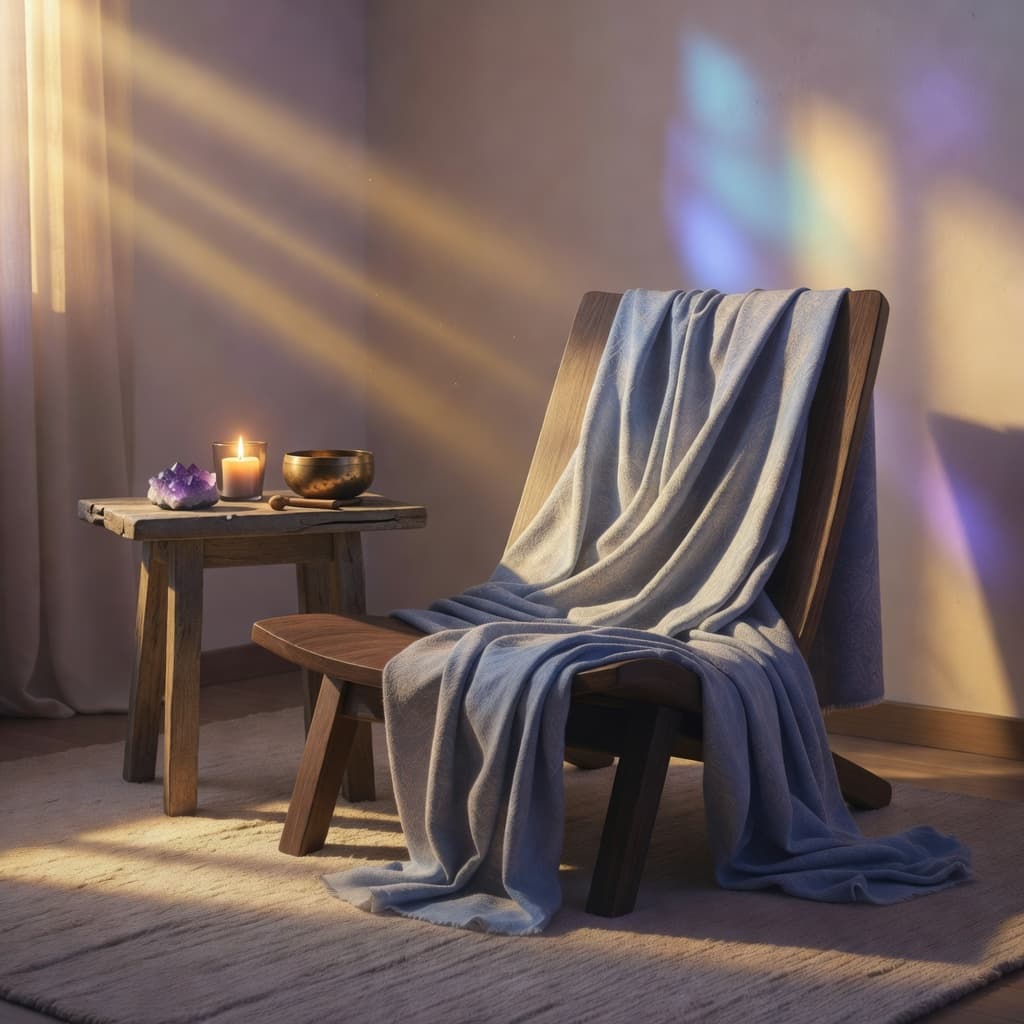
A calm setup does part of the work before you even sit down. A prepared space makes it easier to start. A cushion, blanket, mat, or timer nearby reduces small decisions.
You do not need a dedicated meditation room a quiet corner, soft lighting. Just one familiar seat can be enough for your cue.
1. Simple to use.
2 Comfortable.
3.Easy to ignore once the session begins.
4. Not something that creates extra work or distraction.
The best meditation tool is the one that removes at least one obstacle. And, if you’re ready to think beyond the basics, our guide on meditation furniture has suggestions, you may not have thought of yet.
Beginner friendly meditation tools worth trying first
A beginner does not need a giant shopping list. Most people do well with a few basics that cover comfort, focus, and routine. Some tools help your body settle, while others help your mind stop checking out after 30 seconds.
Meditation apps and guided audio for step-by-step support
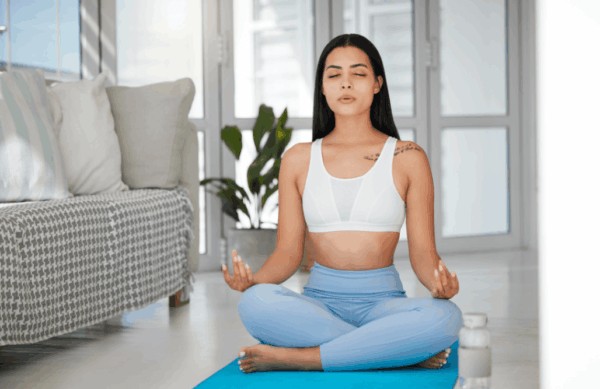
Guided meditation is one of the easiest entry points. The audio helps to guide the mind throughout the different steps needed toward relaxation. It helps with the question beginners ask most: “What am I supposed to do now?”
Many popular meditation apps walk you through:
- Breathing exercises
- Body scans
- Short check-ins
Simple relaxation techniques
Whether you use Headspace, Calm, or Insight Timer, the structure of guided meditation helps. You press play, follow the voice, and stop guessing.
If you want a good starting point, you’ll easily find many guided meditation sessions that are short. This makes it easier to build a habit without making your practice feel like longwinded homework.
Timers, bells, and sound cues that keep you off your phone
A meditation timer solves a sneaky beginner problem: clock-watching. When you know a soft bell will end the session, you can stop peeking at your phone. That alone makes the experience feel much calmer.
A few sound options work well for this:
- Simple chimes or digital bell sounds
- A quick strike of a singing bowl, if you already have one
- A start bell and an end bell
- One sound at the end, and nothing else
If your phone is too tempting to scroll, then use a stand-alone device. That may be better than an app on your phone in this case.
Mats, cushions, chairs, and shawls for a more comfortable seat
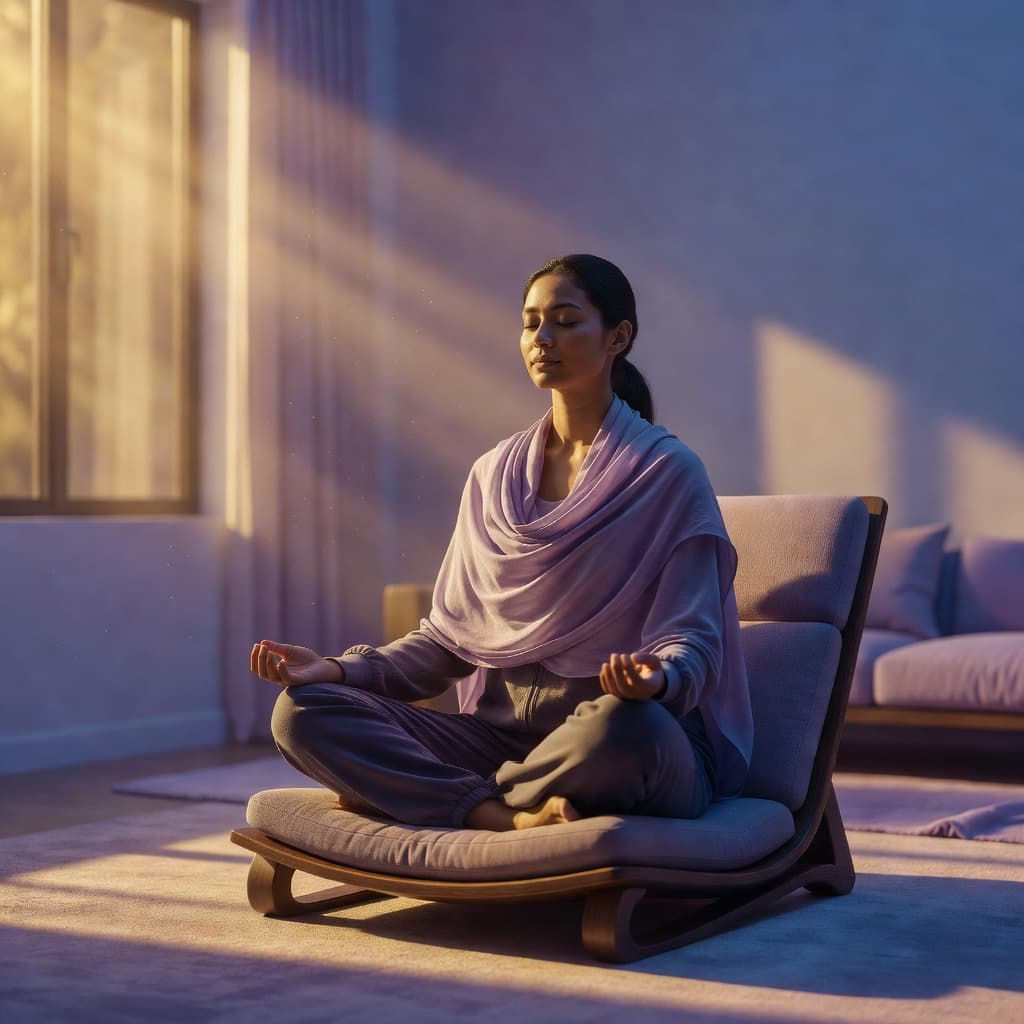
Comfort matters more than style. Traditional practice often calls for an upright seat with your hips slightly higher than your knees. Although sitting that way on a hard floor for a longer session can leave your hips, legs, and lower back sore.
Here’s a few options that can help, depending on what your body needs:
A mat adds padding under your knees and ankles.
A meditation cushion tilts your hips forward so sitting upright feels less strained.
A meditation chair or kneeling seat works well if the floor isn’t working for your body. If you’re curious about a folding meditation floor chair, here’s one to take a look at. And if you prefer a kneeling meditation position, here’s a meditation stool/ bench worth a browse.
A light shawl or blanket helps more than people expect, since getting cold halfway through a session is distracting.
Using supportive meditation seats helps you maintain proper posture throughout your session. If you are building a fuller home setup, focus on one supportive seat and a soft layer underneath.
Singing bowls, crystal bowls, and other sound tools for focus
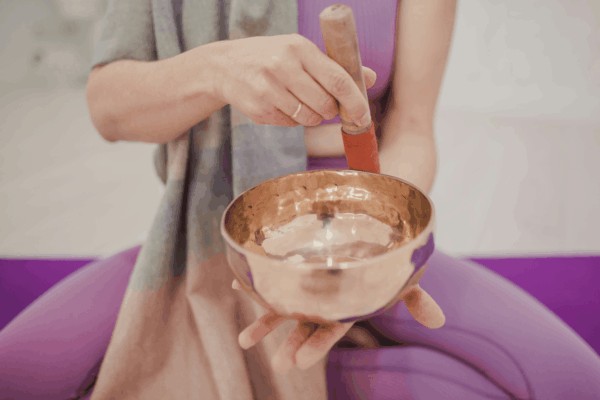
Sound tools can create a clear beginning and ending to your practice. One strike of Tibetan singing bowls can act like a gentle boundary. Signaling that it is time to be present. If you’d like to explore one, here’s a hand-tuned singing bowl worth a look.
How to use one:
- Hold the bowl in your non-dominant hand.
- Gently strike or circle the rim with the mallet in your other hand.
- Let it ring until the sound fades naturally.
Crystal bowls and other tone-based tools can do the same thing, if you enjoy longer, sustained sounds. A single bowl is often the easiest and most affordable way to start before exploring a full chakra bowl set. Although if you love the idea of a full range of chakra tones from the start, here’s a beautiful 7 chakra crystal bowl set, to take a look at.
A couple of things worth keeping in mind: They’re optional, not required. Louder isn’t better. Used lightly, they can add focus and rhythm, without taking over the session.
Mala beads, journals, candles, incense, crystals, and other small supports
These are the small ritual tools people often love first.
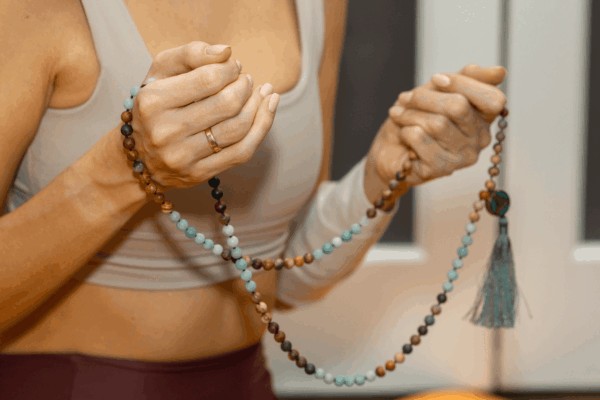
Mala beads can help you count breaths or repeat a short mantra. As this helps with focus on the session without watching a clock. Here’s some mala beads to explore in different healing crystal options.
A meditation journal gives you a place to jot down what came up before or after a sitting. If you’re just starting out, here’s a journal designed for beginners, worth a look.
Candles, incense sticks, or essential oil diffusers can make the practice feel distinct from the rest of the day.
Mandalas can work well as a tactile or visual point of focus.
Using mala beads:
- Hold the string in your hand.
- Move one bead per breath as you inhale and exhale.
- Work your way around the strand.
If you burn candles or incense, make sure the room is well ventilated, and never leave them unattended.
If you’re scent-sensitive, feel free to skip the incense and stick to visual or tactile aids.
Many of these smaller items also make thoughtful presents, so if you’re shopping for a fellow meditator, our roundup of meditation gifts is a good place to start..
Wearables, tone therapy devices, and other tech-based options
Some beginners like a bit of extra tech to support their sessions.
An electronic sound bath machine is worth a mention too. Many are as simple as pressing a button to play calming, Tibetan-bowl-style tones. Sound-based tools like this are generally used to help support relaxation, though results can vary from person to person. If you’re curious what one looks like, here’s a sound bath machine to take a look at.
Noise-cancelling headphones can help block out the world if you find external noise distracting. Headphones also help when you’d like to immerse yourself completely in the session.
A weighted eye pillow can help deepen your focus the same way for some people, though it may not suit everyone’s comfort or sensory preferences.
Still, keep this category optional. You do not need complex technology to sit still for five minutes. Try simple tools first, then add tech only if it makes your practice easier, consistent and more enjoyable.
How to choose the right meditation tools for your own routine
The easiest mistake is buying too much too soon. Meditation can turn into a shopping project if you are not careful, and that misses the point. Start with the tool that solves your biggest problem right now.
What would that be for you?
Start with one tool that solves your biggest beginner challenge
If your mind keeps bouncing all over the place, guided audio may help most.
If sitting hurts, get a cushion or use a supportive chair.
If you keep skipping practice, a simple timer, a small journal can make the routine feel more real. Even making your space look more inviting for your session can be a great visual cue.
Ultimately, your choice should support your long-term well-being by removing barriers to entry.
Think in terms of friction. What is the thing that makes you stop before you start?
Pick the tool that reduces that one issue first.
Match the tool to your space, budget, and meditation style
A tiny apartment setup can work beautifully. So can a corner of your bedroom, a seat by the bed, or a folded blanket in the living room. You do not need a dedicated studio or expensive accessories to get started.
If you want a low-cost way to test out a guided meditation, Insight Timer is easy to browse and beginner-friendly.
For travel, portable tools make more sense. Such as earbuds, a small timer, or even a mala bracelet for focus.
For at-home practice, comfort usually matters more than portability.
FAQ meditation tools for beginners
Do beginners need meditation tools at all?
Not really . You can try to meditate without any extra meditation tools. All you need is a quiet minute and a place to sit and focus. Even though tools are always optional, they’re helpful when they make your daily meditation more comfortable, consistent and enjoyable.
What is the best first tool to start with?
For most, it is either guided audio or a more supportive seat. If you are unsure how to begin, start with an app on a trial period. If your body becomes uncomfortable quickly, start with a meditation cushion or a stable chair.
How many tools are too many?
If setting up your space takes longer than the meditation session itself, you probably have too many items. A small, repeatable setup is far better than a complicated one that you eventually avoid.
Are sound tools or journals useful for everyday practice?
They can be. A singing bowl, a meditation bell, or a short journal entry can help mark the habit and make your practice feel grounded. Use these tools when they truly support your routine, rather than using them because you feel like you should.
Final thoughts on beginner meditation tools
Meditation becomes much easier when it feels less like a chore and more like a quiet place you can return to. The right equipment does not make your practice perfect. Although it does make the habit sustainable, doable and inviting.
According to Harvard Health, regular meditation practice has been linked to improvements in heart rate variability, a measure connected to how well the body manages stress. Results like this build gradually and do vary from person to person, rather than happening overnight.
Remember, meditation is a journey, not a destination.
If you’re building your space one step at a time, start with comfort, keep your routine simple. And then only add items that help you keep showing up.
For a more complete practice space, check out our related posts on meditation chairs, meditation cushions, and meditation furniture setup.