Written on 14th December, 2021. Fully updated on 25th May, 2026.
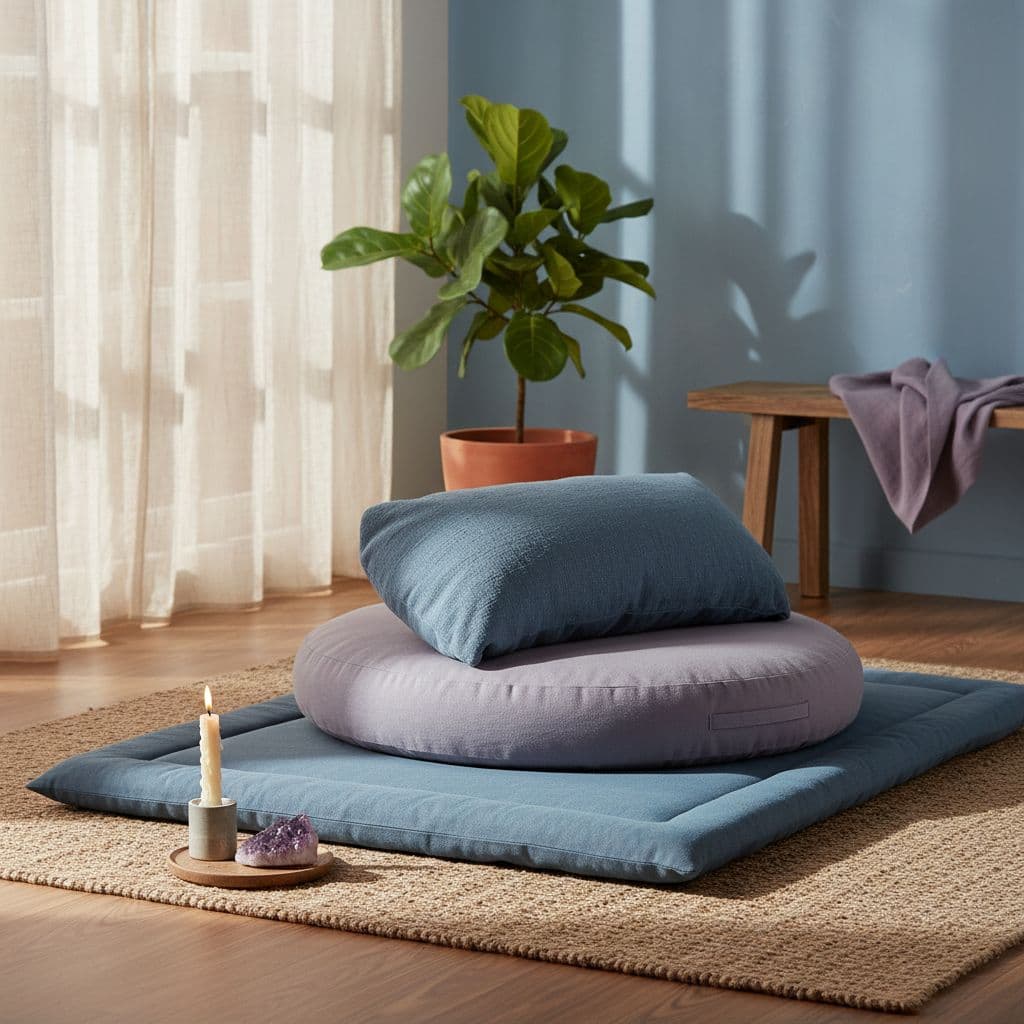
Meditation cushions come in various shapes, sizes, and fills. Finding the best cushions for meditation for your body type helps with feeling settled and supported.
This guide is for those exploring options for the first time or looking for a better fit. We cover different shapes, fill types, and height options to help you narrow down the right choice.
Cushion and mat sets are also worth exploring. While the cushion supports a proper posture during seated practice or breathwork, the mat protects your ankles and legs from hard floors. Also, they provide a stable foundation for lying down practices like body scans or yoga nidra.
For a look at chairs and benches, our meditation furniture guide covers those options in one place.
Key takeaways
Meditation style comes first — the way you like to practise shapes everything else.
Cushion shape affects leg room, stability, and how weight is distributed.
Fill type determines firmness, weight, and how adjustable the cushion feels.
Height — finding the right height for your body can support a more comfortable and natural posture.
Cushion sets offer a multifunctional foundation for seated, breathwork, and lying down practices.
Every body is different — the same cushion can feel right for one person and uncomfortable for another. Which is why shape, fill, and height all matter.
What cushion works best for your meditation style?
What cushion works best for your meditation style depends on your meditation practice and the positions that feel most comfortable for your body.
Different positions and meditative styles call for different kinds of support. And this includes shape, fill, and height, playing a role in finding the right fit.
Support for Seated Postures
A cross-legged position, half-lotus, or similar posture generally benefits from a cushion that provides good hip support. That gentle lift encourages the pelvis to tilt forward naturally, supporting a more comfortable and upright position during practice.
A cushion that helps maintain a supported posture, also helps breathwork feel easier and more natural throughout the session. You can read more here at research supports the connection between spinal alignment and breathing techniques like pranayama.
Space under the knees and a stable base also matter. Round zafus and crescent shaped cushions are well suited for this as they lift the seat and provide a grounded feel. For a broader look at posture and cushion matches here’s Calm’s breakdown of cushion types as another helpful reference.
What happens when a cushion is not enough for kneeling practice?
Kneeling practice places pressure on the body differently to other positions. The shins, ankles, and knees often need more support than the hips in this position.
A lower, wider cushion can work better here than a tall round one. Placing a zabuton mat underneath can also help by cushioning the ankles and knees from the hard floor surface.
If more support is still needed, a meditation bench is worth exploring. It helps shift weight off the ankles and supports a more comfortable kneeling position. Yoga blocks placed under the shins can also add useful stability.
If the position still feels cramped or unbalanced, it may simply be a sign that a different style of support suits the body better. If you would like to explore seating and chair options further, our meditation chairs guide is a good place to start.
How cushion shape changes comfort and support
How cushion shape changes comfort and support is one of the most practical things to understand before buying. Shape affects how weight is distributed, how much room the legs have, and how stable the seat feels.
Round zafu cushions for steady lift
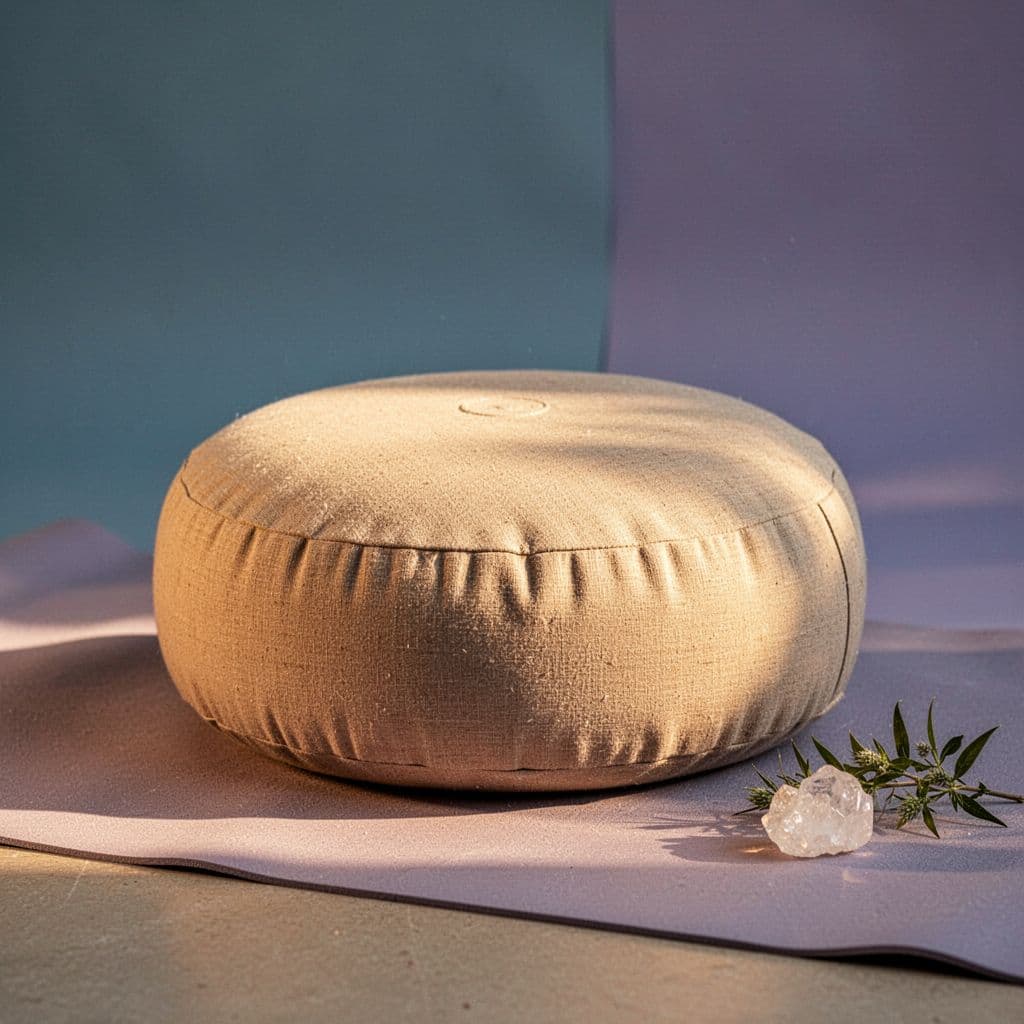
A zafu cushion is a widely used option for floor-based practice. It provides a centred seat, solid lift, and a compact base that works well for cross-legged and seated postures.
The shape can also encourage a more natural spinal alignment when the hips are lifted to a comfortable height. If you tend to settle into one position and stay there, this shape can feel clean and grounded for some of us.
Crescent cushions for more leg room
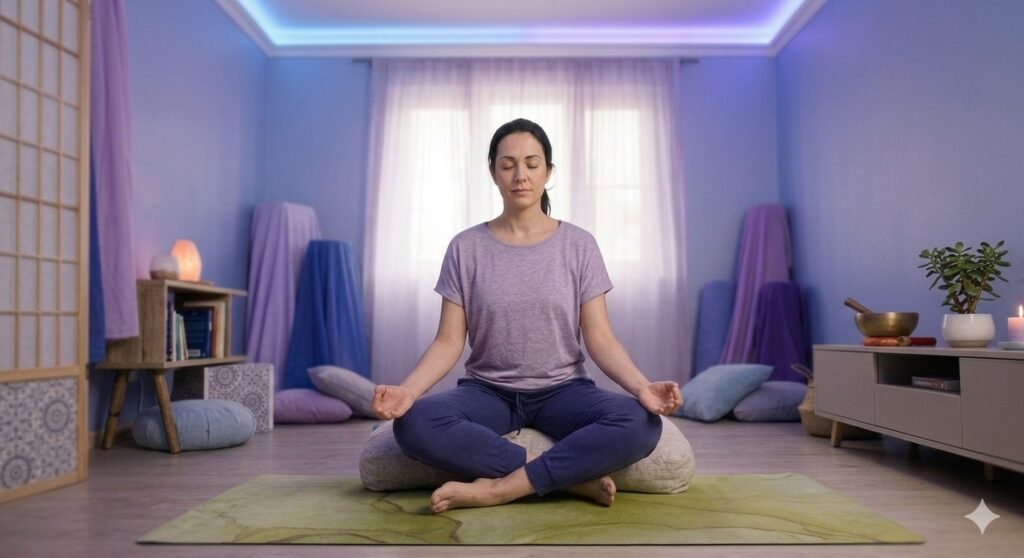
Crescent cushions have a curved front edge that opens up more space for the thighs. This can help reduce pressure where the legs meet the seat.
A V-shaped cushion or cosmic cushion offers a similar benefit for those who need extra room to settle comfortably into a lotus or half-lotus posture.
Square cushions for a wider, stable seat
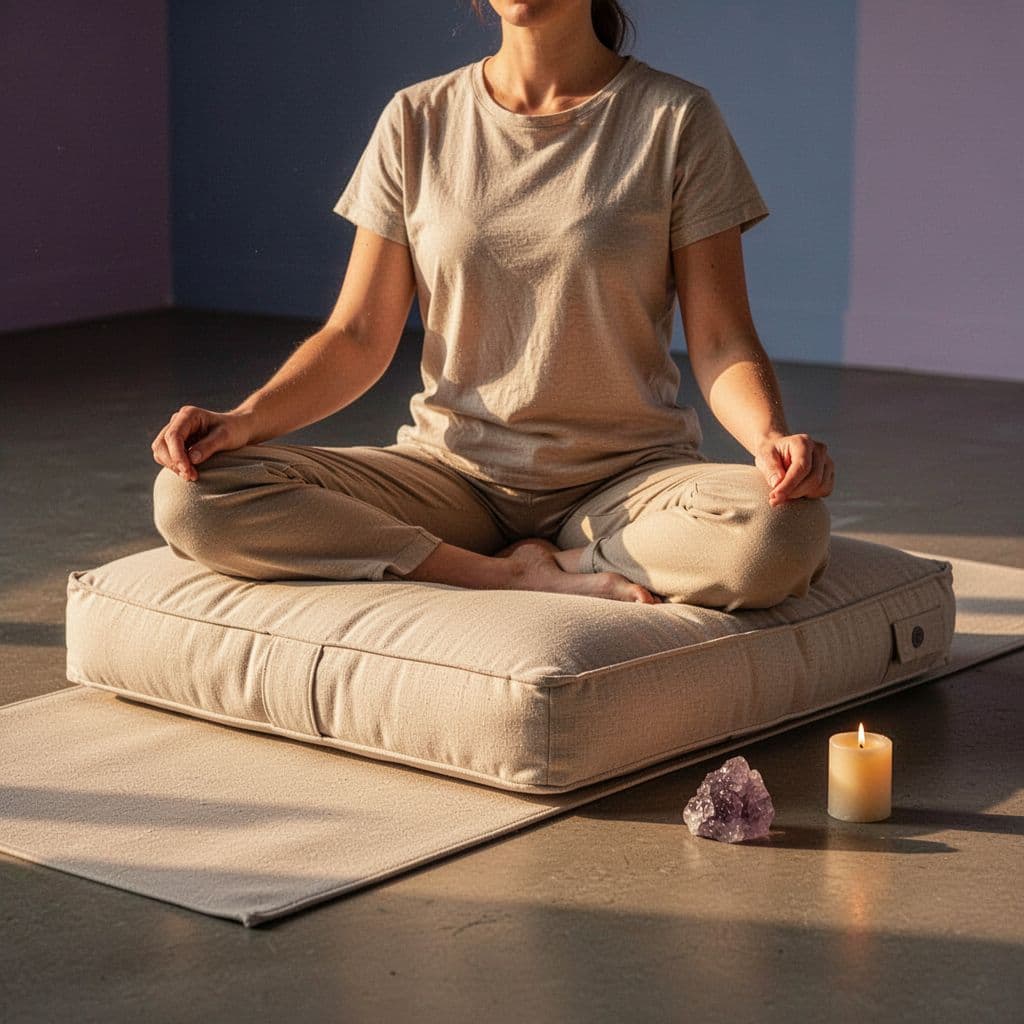
Square cushions offer a broader and more grounded feel. Many are made with natural materials like organic cotton and buckwheat hulls. Making them a popular choice for those who prefer eco-friendly options.
They work well for those who shift positions during practice, kneel at times, or prefer more surface area beneath them. If a round seat feels too narrow or perched, a square cushion is often a more comfortable alternative.
Fill material, firmness, and height: details that matter
Fill material, firmness, and height work closely together. Once the right shape is found, these three details are what make a cushion feel genuinely comfortable and supportive during practice.
Buckwheat hull fill for firm and adjustable support
Buckwheat hull fill is a widely used option in meditation cushions. The hulls shift gently under the body, allowing the cushion to mould to the shape of the body without collapsing.
Some of the designs also allow fill to be added or removed, which makes it easier to adjust the height and firmness to suit the body. Many cushions also feature a removable organic cotton cover, which can be a more eco-friendly option.
Kapok fibre for a softer, lighter feel
Kapok fibre offers a softer and lighter alternative to buckwheat hulls. It provides an immediate cushioned feel that some may find more comfortable, particularly for shorter sessions.
Over time kapok can compress. So it’s worth keeping that in mind when considering firmness over the longer term.
Choosing the right cushion height for your body
Finding the right cushion height for your body is one of the more personal decisions in this process. A general guideline is that hips sitting a little above the knees can encourage a more comfortable and natural posture. A yoga bolster is another useful comparison point for height and loft. If the hips feel open and flexible, a lower seat may feel more natural.
For a broader look at how height and posture work together, this practical guide to cushion height and posture is another helpful read.
A simple way to choose the right cushion before you buy
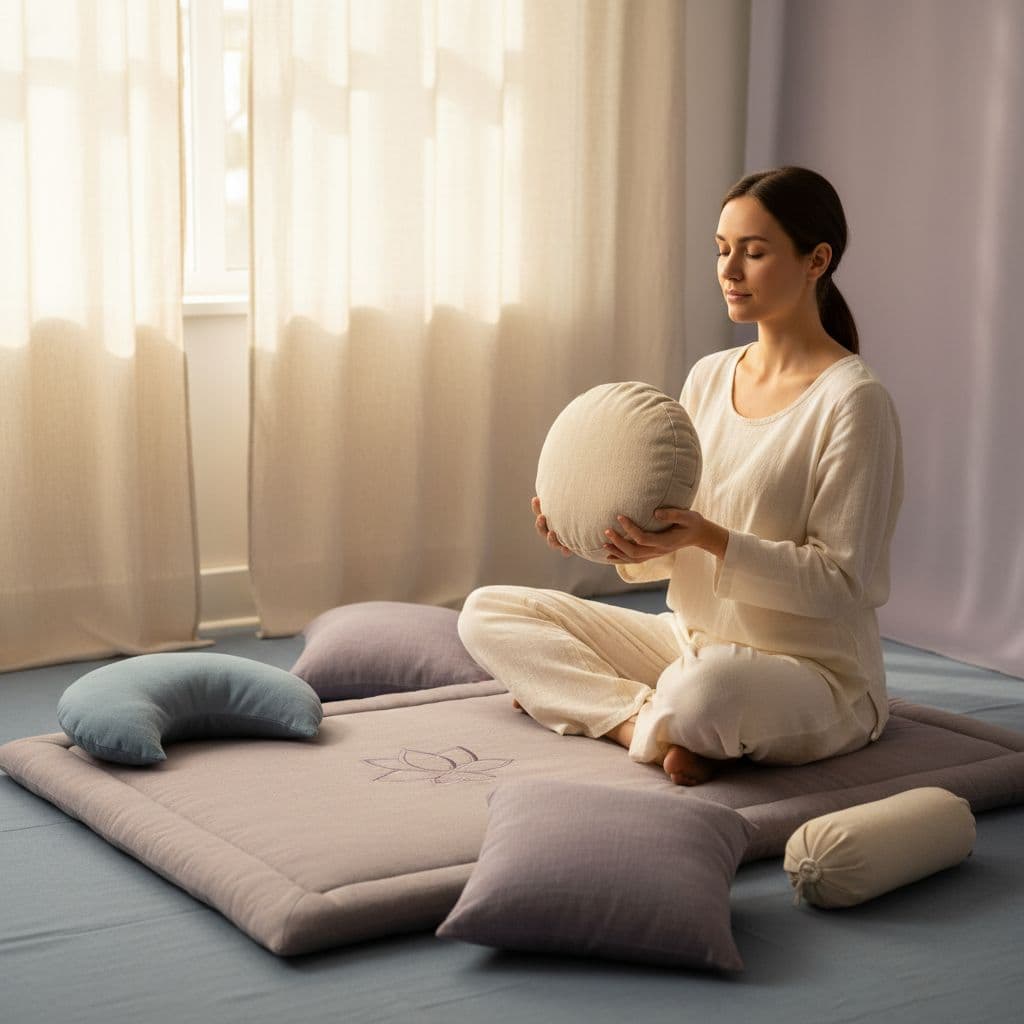
A simple way to choose the right cushion before you buy is to focus on three things:
- What style of meditation practice you do, includes positioning of your body..
- Where discomfort tends to show up first.
- Whether you need more lift, more leg room, or a wider base.
New to meditation cushions?
If you’re new to meditation cushions a round zafu cushion with a firmer fill may be a practical place to start. Here are some things to look for:
Round zafu cushion — offers a reliable and supportive base that can support a more natural spinal alignment
Firmer fill — buckwheat hulls or kapok fiber both hold their shape well, making it easier to notice if the height feels right
Removable cover — a practical feature worth looking for when comparing options
Natural and sustainable materials — a worthwhile consideration for those who prefer eco-friendly choices
Zabuton cushion set — pairing your zafu with a zabuton cushion set adds extra comfort and support beneath the body
If you’re looking for a floor cushion or cushion and mat set to start with, here’s 3 various ones that I’ve hand picked and are quite popular. So there’re worth a look
Hips feeling tight during practice?
A crescent shape or slightly taller cushion may feel more comfortable here. Here’s a few to consider
Crescent cushion — some come in a few different sizes, which means curved edge creates more room around the thighs.
Taller seat — the extra lift can make it easier to find a natural upright position.
V-shaped or cosmic cushion — similar benefit for those who need a little more space to settle into a lotus pose.
If a crescent shape feels like it might suit you better, here’s one I’ve handpicked which might be just what you are looking for. Crescent shaped cushion
Changing postures during practice
Changing postures during mindfulness practice is something a wider or adjustable floor cushion seems to handle better. Here’s some options to to think about
Square cushion — broader base allows more freedom to adjust during practice.
Adjustable buckwheat fill — can be added or removed to suit different positions and comfort levels.
Cushion and mat set — provides a stable and supportive foundation for varied practice styles including lying down meditations
If you like the idea of adjustable styles , here’s a handpicked adjustable style cushion mat set have a look and see what you think.
Meditation cushions for travel and on the go practice
Meditation cushions for practice on the go practice are worth considering for anyone who travels alot. Not all cushions are created equal when it comes to portability. Here’s a few things to think about:
Kapok fill — naturally lighter than buckwheat hulls. Making it a more practical choice for carrying or packing.
Carry handle — a small but useful detail for moving between spaces regularly.
Travel case — some cushions come with a zip up case which makes packing and storing much easier.
Foldable or flat design — packs away easily and takes up very little space when not in use.
Compact size — a smaller footprint makes the cushion easier to carry without compromising on comfort or support.
If you like the idea of practising on the go, here’s one that can be used as a portable meditation cushion it’s light weight and with a carry handle, so worth exploring.
For those who need to travel super light, inflatable meditation cushions maybe worth considering. Keep in mind that inflatable versions may not offer the same longevity as buckwheat or kapok filled cushions.
FAQs
What is the difference between a meditation cushion and a standard pillow?
A standard pillow is typically designed for comfort while reclining or sleeping. It often lacks the structural density needed to support an upright posture during seated practice.
A meditation cushion is specifically engineered with firmer fill, such as buckwheat hulls or kapok fibre. to provide a stable, lifted base that helps align the spine and reduce pressure on the hips.
What are the best cushions for meditation for a beginner?
Many find that a round zafu with a firm fill is a practical starting point. It offers a stable, lifted seat that helps with spinal alignment. However, the right choice depends on your body’s unique needs and how you prefer to sit.
Do I need a mat with my meditation cushion?
This really depends on your meditation style and comfort levels. A zabuton mat provides a cushioned and supportive layer between the body and the floor, while the cushion supports posture above. Together a zabuton cushion set offers a more comfortable and well supported foundation for practice.
Is a firmer cushion better than a soft one?
Firmer support cushions generally hold their shape better over time. Softer options can feel comfortable at first but may compress too much during longer sessions. This makes it harder to maintain a natural and comfortable posture.
How high should a meditation cushion be?
A general guideline is that hips sitting a little above the knees can encourage a more natural and comfortable posture for breathwork. Although, every body is different. So finding the right height is a personal process.
Can one cushion work for different practice styles?
Sometimes yes. A square cushion or one with adjustable buckwheat fill tends to offer more flexibility for those who shift positions or practise in different ways.
Do I need a special cushion for lotus or half-lotus?
Not always. A round or crescent meditation pillow often works well for these postures, provided the height and firmness feel right for your body.
Are meditation cushions easy to travel with?
It depends on the fill. Kapok filled cushions are lighter and easier to pack than buckwheat hull options.
There are also inflatable versions. Some cushions also come with a carry handle or travel case, making them more practical for on the go practice.
Final thoughts on finding the right meditation cushion
Choosing your meditation cushion comes down to a few key things.
The way you like to practise, which shape gives your body room, what fill feels steady and supportive. And how much height feels natural and comfortable.
The right cushion and mat set can also open up alot more possibilities. From seated and breathwork practices to restorative and lying down sessions like yoga nidra and body scan.
A zabuton mat placed underneath the cushion can also add extra cushioning for the ankles and knees, creating a well supported base for your meditation space.
If you are still exploring, here’s our related guides with more information on each area:
So, what kind of cushion does your body need to feel at ease during mindfulness meditation practice? One that helps you feel grounded, supports your posture, allowing the mind to feel at peace.