Written on 12th January, 2022. Updated on 5th July, 2026.
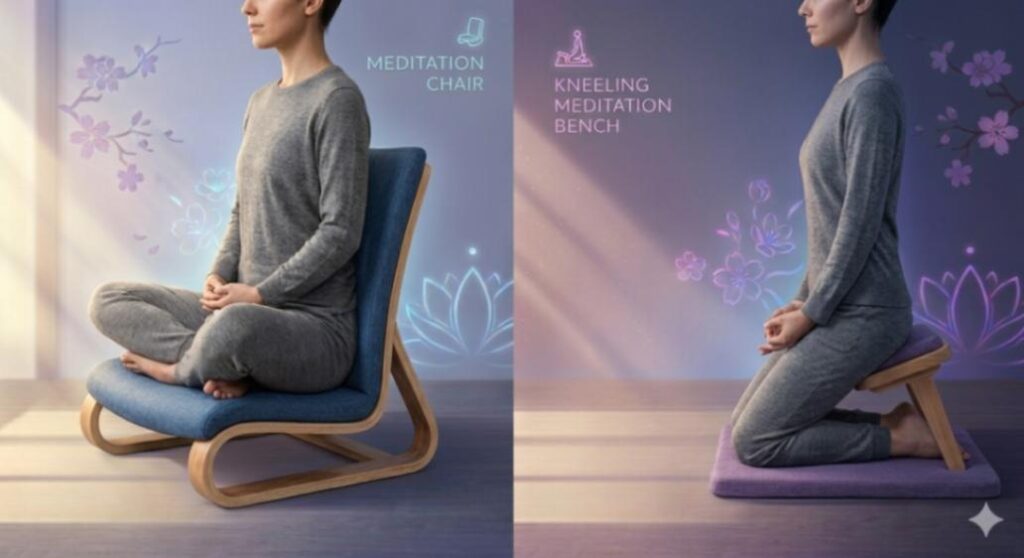
Meditation chairs and kneeling seats are designed to make practice more comfortable and supported. Both offer an alternative for those who find floor based or cross-legged positions uncomfortable or unsupported.
Whether it’s a tired lower back, tight hips, or pressure on the knees, the right seat can make a real difference. From chairs with a backrest to kneeling seats, finding the right support helps the body feel more settled and at ease.
This guide is for anyone exploring these options for the first time — or looking for a better fit for their body and meditation style. It covers the key differences, what to look for in each, and how to choose between them.
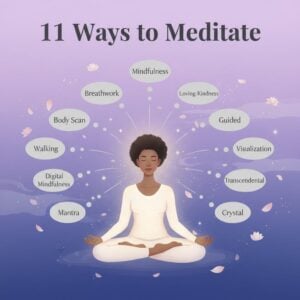
Chair based and kneeling practices are two of the many ways to meditate. The right piece of furniture can make a session feel more comfortable and intentional. For a broader look at cushions, mats, and other meditation tools, our meditation furniture guide covers it all in one place.
Quick answer box
Question | Short answer |
|---|---|
What is a meditation chair? | A supported upright chair designed for comfortable seating practice. |
What is a kneeling seat? | A kneeling seat is designed to support a kneeling position. Encouraging a more natural and upright posture through a forward tilting angle. |
Which is better for back comfort? | Depends on your body comfort and personal preference. Chairs suit those who prefer a seated position. Kneeling seats suit those drawn to a kneeling position for comfort or spiritual tradition. |
Can both support breathwork? | Yes — both encourage an open chest and natural spinal alignment. |
Are they portable? | Some folding and lightweight options are available in both categories. |
Key takeaways
Meditation chairs offer upright back support using an ergonomic design.
Kneeling seats are used in a seiza-style position, where you sit with your legs folded beneath you while the angled seat supports an upright posture.
Seat height plays an important role in how comfortable and supported your body feels.
Gentle back support in meditation chairs helps with prevention of slouching during longer sessions.
How does a meditation chair support better posture?
A well designed meditation chair encourages an upright position during practice. Usually it has an ergonomic back support design and stable base that work together. This helps the spine feel naturally aligned and the chest stay open throughout a session.
An upright and supported position allows breathwork to flow more naturally throughout the whole body. Here’s more information on posture and meditation and how an aligned position can support a more comfortable and settled practice overall.
What is the difference between a meditation chair and a kneeling seat?
The difference comes down to the position each one supports and how weight is distributed during practice.
A meditation chair keeps the body upright, helping to support the back. Many chair styles include a backrest for additional lumbar alignment. Floor chairs sit directly on or near the ground and often include a backrest for added support. Floor chairs are a practical option for those who prefer a lower seated position.
A kneeling seat tilts the pelvis forward naturally — encouraging the spine into a supported upright position. There is no backrest with kneeling seats as the upright position itself is the support.
Here is a quick comparison to help narrow down the right choice:
Meditation Chair | Kneeling Chair | |
|---|---|---|
Position | Seated Upright, usually with a backrest or back support | Gently forward-tilting with an open hip position. |
Back support | Often includes a backrest | No backrest — position provides support |
Best for | Wide range of body types and practice styles | Those who prefer a kneeling position |
Physical discomfort | Suits those with hip, knee, or back sensitivity | Suits those whose lower back tires in traditional chairs |
Breathwork | Open chest supports breath flow | Forward tilt may support breath flow |
Portability | Some folding options available | Many folding and lightweight options available |
Typical seat angle | Flat or slightly tilted | 20 to 30 degrees forward tilt |
The right choice depends entirely on which position feels most supportive for your body. Which one would feel more comfortable for you?
Meditation chairs: what to look for
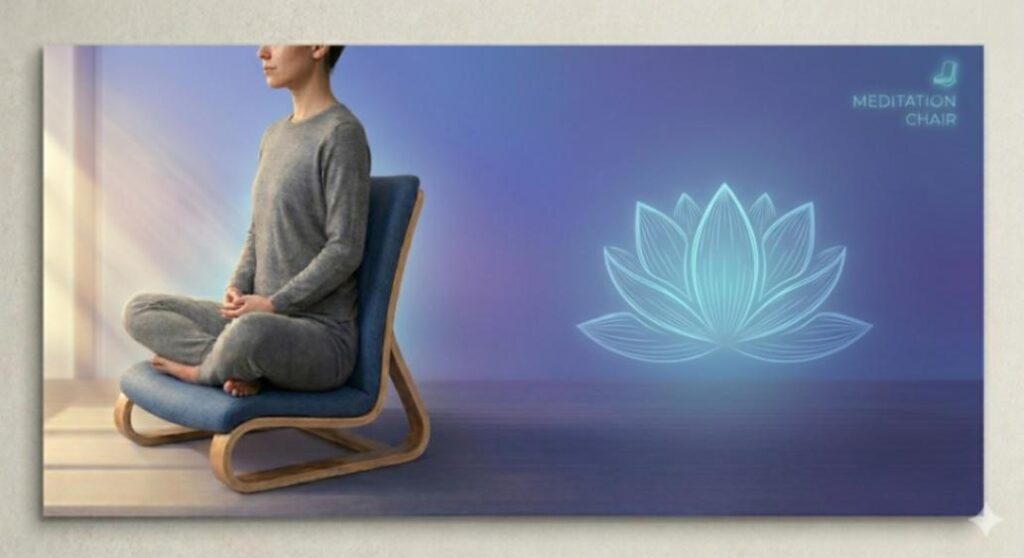
When you’re meditating, you want to be able to focus on the moment rather than constantly correcting a slouched back while you’re getting into your flow. Using a chair can help support your posture, which keeps the focus where it belongs. On your breath and relaxation.
How much back support do you need?
Back support is worth considering — particularly for longer sessions. A gently structured backrest can help the spine maintain a more supportive upright position throughout practice.
A cushioned backrest tends to feel more comfortable than non cushioned firm wooden backrest. Especially for longer sessions.
Here are two meditation chairs worth exploring for anyone looking for a floor-based design with back support.
Why does padding and base stability matter?
Padding affects how comfortable the seat feels as a session progresses. A seat that is too firm may become less comfortable over time, with the hard surface becoming more noticeable. Adequate padding helps maintain a comfortable seating experience throughout the session.
Base stability also matters, as a well-constructed wooden frame helps keep the chair steady and reduces unwanted movement during use.
What materials work best for a meditation chair?
Wooden frames are commonly used for their strength and ability to maintain structural stability over time, compared with lighter frame constructions.
Breathable fabric covers are more suited to longer sessions and warmer conditions due to their airflow-friendly feel.
A removable cover is a practical feature worth looking for. You can get eco-friendly options like organic cotton. It’s worth considering for those who prefer sustainable choices.
For those who like extra cushioning, a small buckwheat filled meditation cushion placed on the seat can also add a personalised level of comfort.
Kneeling seats: what to look for
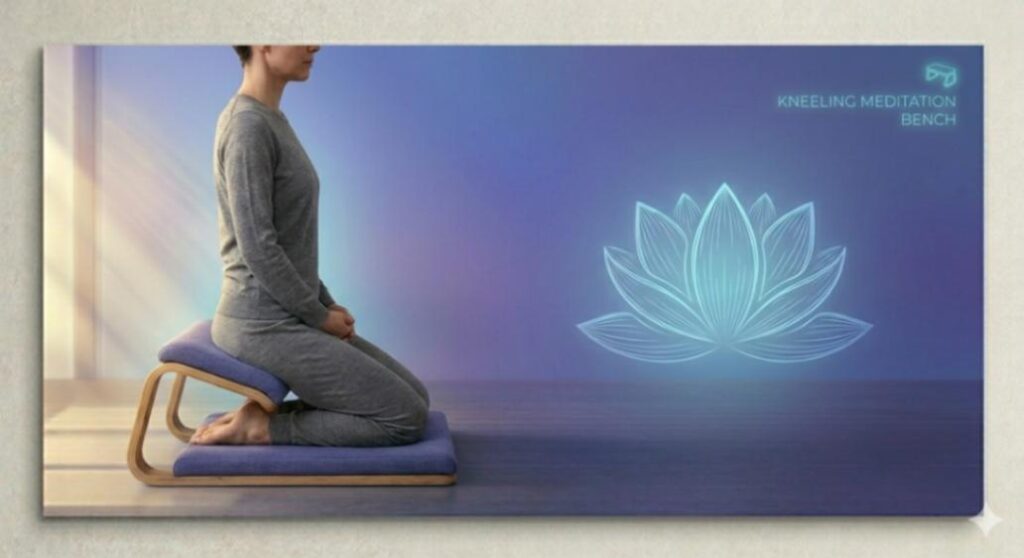
Kneeling seats come in a range of styles and designs. Knowing what to look for before buying can help narrow down the right option for your body comfort levels and your style of meditation.
How do kneeling seats work?
Kneeling seats are usually tilted seats in a forward angle position. Usually between 20 and 30 degrees.
This design shifts the weight forward naturally, allowing the spine to settle into an upright position. Some models include a padded mat for shin rests to support the lower legs.
Who might find a kneeling seat comfortable?
A kneeling seat suits those who prefer to meditate in a kneeling position during practice. For some this can be rooted in the traditional seiza kneeling posture — a position with deep roots in Japanese tradition. For others it simply feels the most natural position for their body during practice.
Here are 2 kneeling seats worth exploring that are portable.
How might a kneeling seat influence posture?
A peer reviewed study published on PubMed found that a kneeling seat design is about helping maintain a more natural lumbar curve. This may feel more comfortable for those who find lower back pressure an important consideration during practice.
Kneeling seats work best alongside varied positions. They are not designed as a sole seating solution for extended periods.
Can a meditation chair or kneeling seat support breathwork practice?
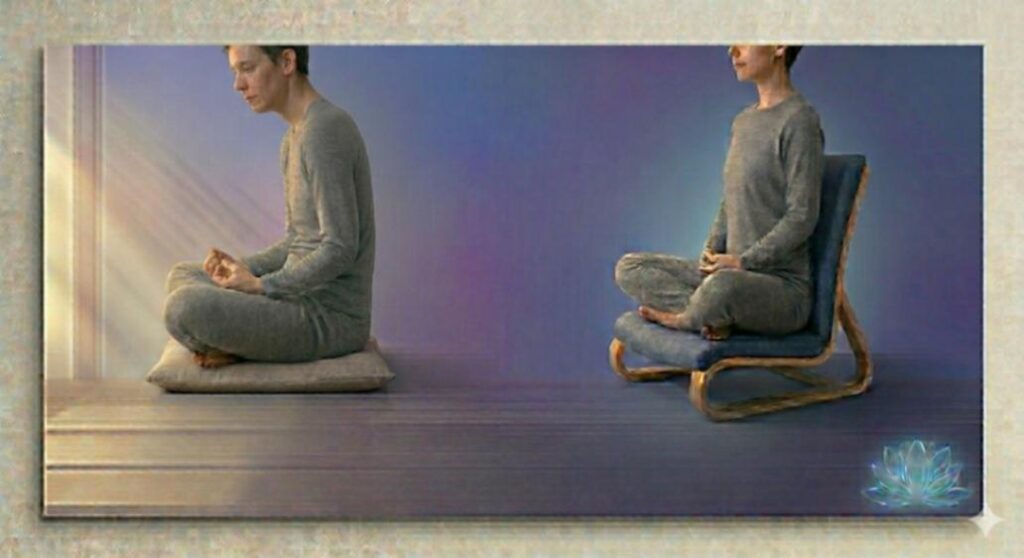
Both support breathwork by helping keep the back upright and away from slouching. The difference comes down to how long you practise and the position that feels most natural and comfortable for your body.
A meditation chair with back support helps the body stay upright rather than slouching during longer sessions. This helps keep the chest open, allowing breathwork to feel more natural throughout.
A kneeling seat works similarly. The forward angled position naturally encourages the spine to stay upright without the need for a backrest. This also helps keep the chest open and giving the breath more freedom to move through the body during practice.
Where does a meditation chair or kneeling seat fit in your meditation space?
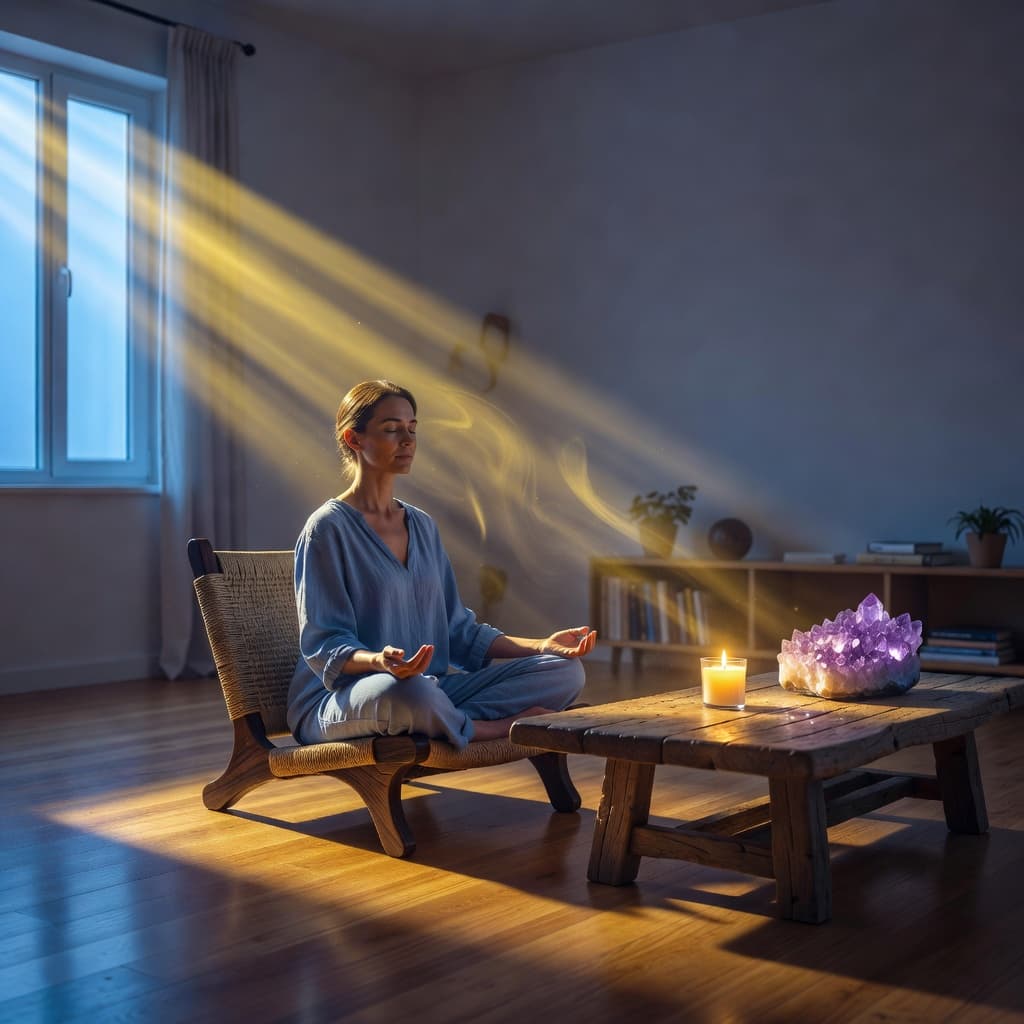
Where a meditation chair or kneeling seat fits really depends on the space available and how it will be used day to day.
If there is a dedicated meditation room or quiet corner? Both pieces can become a permanent and grounding part of that space, always ready and inviting to return to.
For smaller spaces or shared rooms, it is worth considering whether the chair or kneeling seat needs to be folded away after each session.
Some kneeling seats and meditation chairs come with a folding design, making them practical for spaces where storage matters.
A zabuton mat placed beneath the kneeling seat can cushion the feet and define the practice area naturally. A yoga bolster nearby can offer additional support when needed. Meditation accessories like candles, crystals, and a timer can complete the space without adding clutter.
For a complete guide to setting up a meditation room or space, our meditation furniture guide covers everything in one place.
FAQs : Meditation Chairs & Kneeling Seats
Are meditation chairs better than floor cushions?
Neither is better than the other — it depends entirely on your body comfort and your style of practice.
A zafu or floor cushion works well for those who feel comfortable on the floor.
A meditation chair tends to suit those who prefer more back support or less pressure on the knees and hips.
Can a kneeling seat help with back comfort during meditation?
For those who prefer a kneeling position during meditation, a kneeling seat can feel more comfortable and natural than sitting on the floor without support.
The forward angled design encourages the spine to stay upright — which also supports breathwork throughout the session.
It is worth keeping in mind that session length and any existing knee or leg sensitivities may affect how comfortable a kneeling position feels over time.
Are meditation chairs suitable for all practice styles?
Chair based practice suits a wide range of mindfulness and meditation styles including breathwork and visualisation practices. It works well for seated and stationary practice styles.
It’s not suited to lying down practices like yoga nidra or body scan — or movement based practices. For those styles a mat or floor based setup tends to work better.
Can I use a regular chair for meditation?
A regular chair can work well if it feels steady and well supported for your back and legs. Although a dedicated meditation chair with ergonomic support can offer more comfort during longer sessions.
Are kneeling seats portable?
Some kneeling seats are designed to be compact and easy to carry. They’re also practical for travel or smaller spaces. Although, it’s worth checking the weight and folding design before buying if portability is important.
Choosing your meditation chair or kneeling seat: final thoughts
Choosing your meditation chair or kneeling seat comes down to your preferred body position and the style of practice you enjoy. Such as sitting cross-legged or kneeling.
A meditation chair offers the upright support usually with a back support.
A kneeling seat uses an angled tilt design that suits those drawn to a kneeling practice for comfort, spiritual tradition, or personal preference.
Both can support a comfortable, grounded, and intentional practice.
If you’re still exploring, here’s our related guides with more information on each area:
Now the only thing to think about is what kind of support your body needs in order to feel comfortable during your meditation sessions.