
Originally written on 2nd March, 2021. Updated on 2nd August, 2026.

A candle can change the feeling of a room before you’ve even straightened a cushion or sat on that chair. The soft light helps, although scented candles do alot of work. They help with shaping the mood and energy of a space through fragrance and not just the flicker.
This guide walks you through some of the important things that go into choosing your candle to suit the purpose. Things like wax type, wick size, scent throw, style. Even how to match a candle to the room it’s actually going in.
By the end, you’ll know what to check on a label. You’ll know how to pick a scent that fits the space and vibe you’re going for. And also some tips on how to avoid the most common candle mistakes.
So, before you buy the prettiest jar on the shelf, it helps to know a few things: what’s inside it, how you want to use it, and which space in your home it’s meant for.
Key Takeaways
Wax type affects burn speed, appearance, price, and how a candle releases fragrance.
Wick size plays a big role in how clean and even a candle burns.
Fresh, floral, woody, sweet, and seasonal scents each suit different rooms and moods.
Candle size and vessel style should fit both your space, vibe and decor.
A few simple care habits help candles burn longer and more evenly.
Exploring Candle Scents Before You Buy
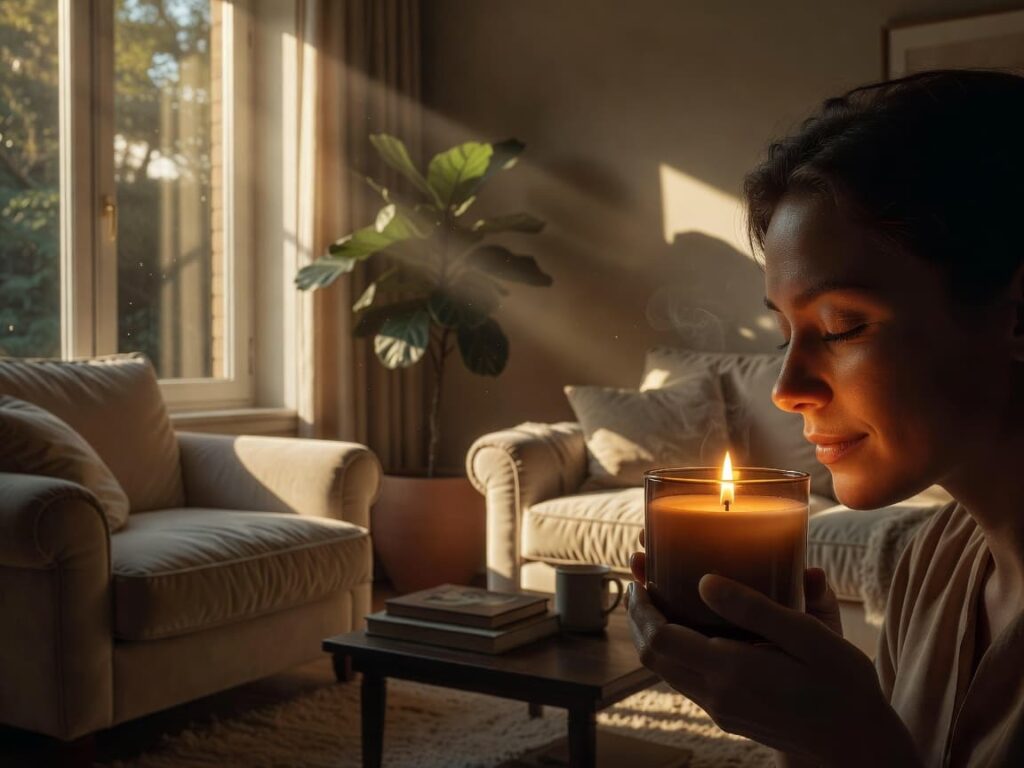
A fragrance name can sound perfect and still feel wrong in your space.
Vanilla notes might feel warm and comforting in one room.
A sandalwood blend might feel too heavy in an office that calls for something fresher.
Think about when and where you’ll burn it.
Think about which fragrance families you’re naturally drawn to.
You don’t need the same scent in every room. Using different fragrances around your home can actually make each space feel more intentional. Adding a personal touch of home fragrance wherever you need it.
Choosing a Scent for Different Rooms and Preferences
Because we’re all drawn to different scents and fragrances and how they move us, there’s no one single right scent for a particular room. In saying this, here’s some popular options that tend to work well in different spaces:
Kitchens and bathrooms: fresh clean scents like citrus fragrances, sea salt, eucalyptus, or linen — clean and crisp, without taking over.
Living rooms and lounges: woodsy candles with cedar, sandalwood, amber resin, or pine — warm, grounding options.
Bedrooms and reading corners: floral scents like lavender, jasmine, or rose — soft, easy to unwind to.
Home offices: light citrus or fresh linen — refreshing without becoming distracting.
Seasonal spaces: seasonal fragrances built around sweet spices like cinnamon and clove for fall; pine and cranberry for the holidays.
For a slower evening routine, softer fragrance families can help set the tone. Our guide to Candles for Meditation: How to Choose the Right One goes a little deeper into that side of things.
Here’s a few room-ready scent picks worth browsing for the space you have in mind:
Understanding Fragrance Strength and Scent Throw
“Scent throw” describes how well a candle fills a room with fragrance.
Cold throw is what you smell before lighting it. Hot throw is what you smell once the wax has melted.
Together, they describe a candle’s overall fragrance throw . And the science behind why they can differ so much comes down to wax, wick size, fragrance load, and airflow.
A candle can smell incredible with the lid off and still feel faint once it’s burning. That’s quite normal. Room size and air movement both play a part in how much of an aromatic backdrop it creates.
A strong candle isn’t always the better choice. In a small room, a gentle scent throw is often more pleasant than one that follows you down the hallway into a space where you didn’t want it. Scent is just one piece of a room’s overall vibe too. Here’s our guide on how to surround yourself with positive energy looks at the bigger picture beyond just what you’re burning.
Wax, Wicks and Fragrance: What to Check on the Label

The label itself tells a small story about the candle. Look past the jar itself and check the wax, the wick, and the burn guidance.
Let’s dive into more of these details.
Comparing Different Types of Candle Wax
Soy wax is popular. It’s plant-based, and it tends to burn at a lower temperature. It can look soft and creamy, and may develop a light frosting over time. That frosting is cosmetic, not a sign anything’s gone wrong.
Beeswax has a natural, honey-like scent and a firmer finish.
Coconut wax is often blended with soy or other plant waxes for a smooth look and a strong hold on fragrance.
Paraffin wax is widely used and tends to carry a strong scent throw. It’s usually the more affordable option too.
Plenty of candles use blended waxes to balance appearance, burn behavior, and fragrance strength. CandleScience’s wax guide is a pretty useful reference on this topic itself.
A few candles across different wax types, so you can compare for yourself:
Exploring Candle Wicks
Natural fiber wicks, like cotton, are common and reliable when sized correctly.
Wooden wicks bring a gentle crackle that some people love for an evening at home.
Either style works — what matters most is that the wick matches the wax blend and container width.
Get the sizing wrong, and problems follow: too small, and the wax can tunnel down the middle; too large, and the flame runs hot and sooty. We’ll cover exactly how to fix both further down, in the care and troubleshooting section.
Here’s a hand chosen style-by-style shortlist, a candle for most of the categories above.
Reading Candle Labels and Ingredients
A useful label tells you the wax type, net weight, burn instructions, and any safety warnings. Some brands also note whether the fragrance is built from essential oils or synthetic blends, and whether the vessel is reusable.
A vague phrase like “natural candle” doesn’t actually tell you much. If ingredients matter to you, look for something specific rather than trusting the front label alone.
Choosing the Right Candle Size, Style and Design
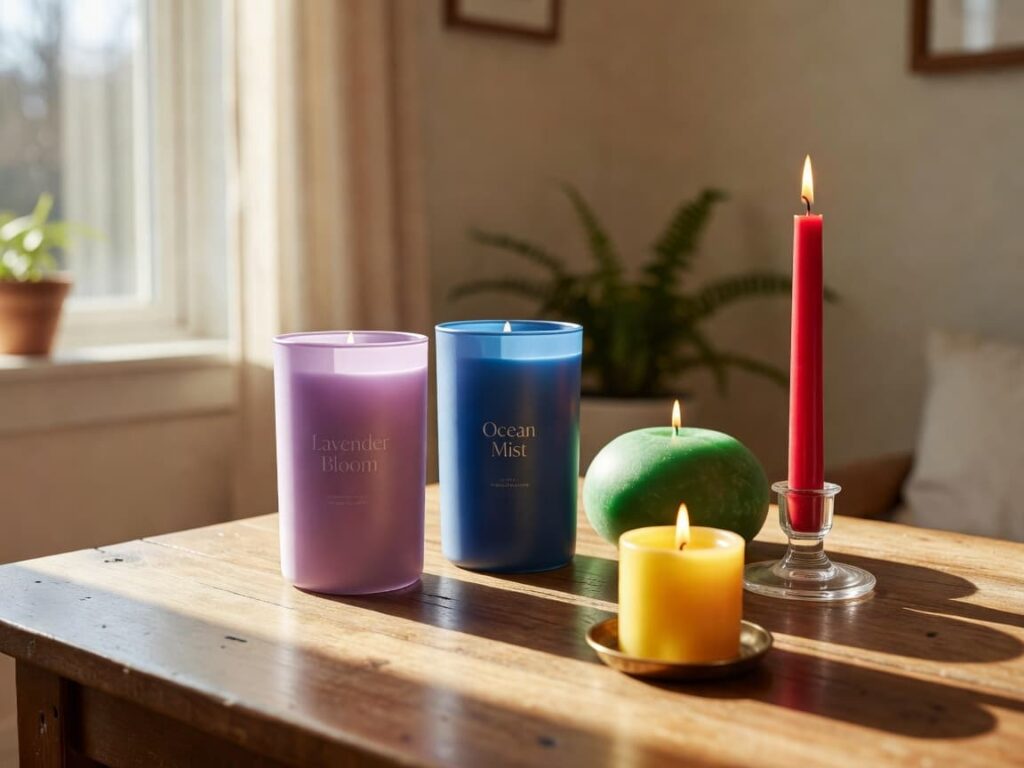
Now, let’s explore this a little further on how choosing the right candle size, style and design can make a big difference before you buy.
Cause a candle that’s too small for a large room can feel weak before it’s even lit. A trio of 3-wick candles in a tiny office can feel like too much, too fast and possibly even cause headaches.
Selecting a Candle Size for Your Space
Small tins and votives work well for desks, bathrooms, and travel.
A single-wick candle in a small or medium jar is a solid everyday pick for bedrooms and average living rooms.
Large jars and 3-wick candles suit open-plan spaces. They throw more light and a stronger hot throw. But they need a stable, heat-resistant surface to sit on.
Exploring Different Candle Styles
Every style brings something a little different to a room:
Glass jars — practical, familiar, easy to place anywhere
Minimalist candles — clean lines, suited to modern spaces
Sculptural candles — decorative first, some better displayed than burned
Luxury candles — heavier vessels, layered fragrance blends, polished packaging
Artisanal candles — distinctive shapes, hand-finished details, small-batch scents
Travel candles — compact and portable, but check a hotel’s rules before lighting one
Choosing Candles for Gifts and Home Decor

Before you buy — for yourself or someone else — a few quick questions can save you from a candle that ends up unused on a shelf:
Who’s this candle for, and do you know their scent preferences?
What room will it live in, and what mood does that space need?
Are you buying for atmosphere, function, or both?
Does the vessel need to match existing decor, or can it stand alone?
A few things to keep in mind if you’re buying for someone else:
Safer scent bets if you don’t know their preferences: fresh linen, soft citrus, or a light wood blend — rather than anything very sweet or spicy
Gift sets that pair a candle with a trimmer or matches take the guesswork out of it
Match the vessel to the room: amber glass suits warm, rustic spaces; white ceramic fits a quieter, modern look
A reusable jar is a nice bonus — it can hold matches, pens, or a small plant once the candle’s done
Once you’ve answered those questions, you’ll likely already know which scent, size, and vessel fit best . That’s really all the decision comes down to.
If you’re shopping for someone’s mindful and meditation lifestyle rather than just a candle, our Best Meditation Gifts guide has more ideas worth browsing.
Using Scented Candles Safely at Home or Work
Never leave a burning candle unattended. Keep it away from curtains, papers, pets, children, open windows, and anything else that could catch fire.
At work, check the building policy first. Plenty of offices don’t allow open flames, even in private rooms. A candle isn’t worth an awkward conversation.
Candle Care and Troubleshooting
Here’s a few trouble shooting tips for getting an even clean burn, issues with tunneling and black soot from candles.
Getting an Even, Clean Burn
Give the wick a trim before every burn — about the length of a grain of rice, roughly 6mm. This one habit makes a noticeable difference in how evenly and cleanly a candle performs.
On the first burn, let the wax melt out close to the edges of the container before putting it out. This helps prevent tunneling later on — a deep well forming around the wick while wax builds up untouched at the edges. Follow the label’s recommended burn time, and avoid going longer than that in one sitting.
Keep the wax pool clear of matches and old wick trimmings, and store scented candles away from direct sun and heat so the fragrance holds up over time.
Common Problems and Quick Fixes
Tunneling: usually comes from putting the candle out too soon, or a wick that’s undersized. Let the first burn run longer to fix it.
Black soot: often traces back to an untrimmed wick, a draft, or a flame burning too high. Trim before lighting and keep it away from airflow.
Weak scent: can mean the room’s too large for the candle, the burn time’s too short, or the formula simply has a softer throw. Sometimes the fix is just sizing up.
How to Choose a Candle Based on Needs and Budget
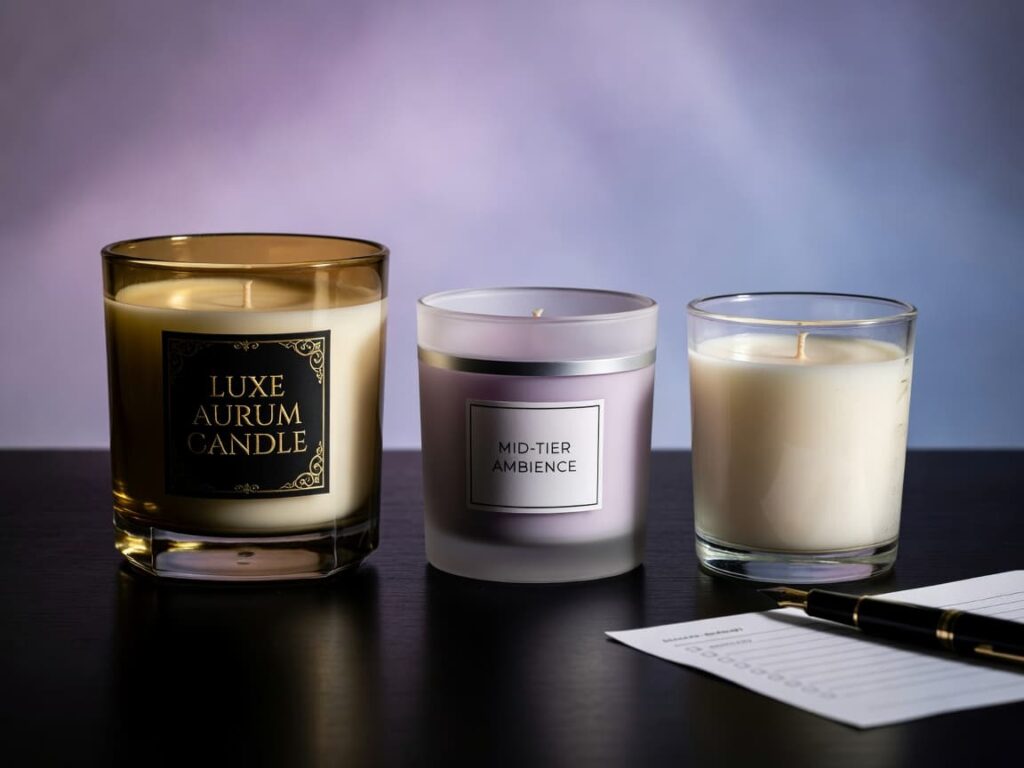
Price usually reflects more than fragrance. Wax type, vessel weight, wick choice, fragrance formula, and packaging all factor into the cost — and into how the candle performs.
Comparing Affordable and Premium Candles
Starter: simple, well-made candles that burn cleanly and smell good, without extra packaging or design flourishes
Mid-Range: better wax blends, more refined scent profiles, and vessels designed to be reused
Splurge: heavier glass, complex layered fragrances, and packaging that’s part of the experience
None of these tiers guarantee a better candle.. Wax choice alone can account for a lot of the price difference, regardless of which tier you land in. What matters more is comparing burn time, wax information, and reviews against the room you’re trying to scent.
Deciding Which Candle Features Matter Most
Decide what matters to you before you shop. That might be a strong scent, a plant-based wax, a reusable jar, a long burn time, or simply how it looks on a coffee table. It might even be for a special mindfulness practice.
When a Flameless Candle May Be the Better Choice

Flameless candles are useful in offices, homes with curious pets, dorms, or anywhere an open flame isn’t allowed. Battery-powered options still bring a warm glow to shelves, tables, and holiday displays.
They won’t give you fragrance or a real flame flicker, but they’re easier to place and can stay on for longer stretches. For atmosphere without an open flame, they’re a sensible option and some look great as well.
Here’s some nice LED candles which are quite popular:
Frequently Asked Questions
What Type of Wax Is Best for Scented Candles?
There’s no single best wax for everyone. Soy, coconut, beeswax, paraffin, and blends each behave differently — in burn quality, appearance, and fragrance throw. The right pick depends on your ingredient preferences, budget and how you plan to use the candle.
How Do I Choose a Scented Candle?
Start with the room and the mood you’re going for. Fresh scents tend to suit focused workspaces, while soft florals and warm woods often feel better in spaces meant for rest. From there, pick a size that matches the room and gives you the scent throw you want.
How Long Should a Scented Candle Burn?
Follow the label, but avoid long single sessions. Most brands suggest keeping each burn within a few hours. Extinguish it if the vessel feels hot to the touch or the flame grows too large.
Why Does My Candle Have a Weak Scent?
The room might be too large for the candle. Or a short burn time might not be giving it enough chance to release fragrance. See the troubleshooting section above for quick fixes.
Why Is My Candle Producing Black Soot?
An untrimmed wick is usually a common cause. Trim it before lighting. Keep the candle out of drafts, and extinguish it if the flame gets too high. Regular candle care can help prevent soot and support a cleaner burn.
Are Expensive Candles Better Quality?
Not necessarily. A higher price can reflect premium ingredients or presentation, but a modestly priced candle can still burn beautifully and carry a strong scent throw. Clear labeling and good care can matter more sometimes than the price tag.
Do Scented Candles Expire?
Scented candles don’t spoil the way food does, but fragrance can fade over time. Keep them covered and out of direct sunlight. A candle that’s been stored for years will likely still burn — it just may not smell as strong as it once did.
Final thoughts about scented candles
The best scented candles do more than fill a room with fragrance. They help create a space that feels calm, cosy, and inviting.
Whether you love fresh, floral, woody, or sweet scents, the right scented candles can transform the mood of your home. Choose a fragrance you enjoy. Pick a size that suits your space. And invest in quality when you can.
A little candle care goes a long way. Trim the wick before each burn. Let the wax melt all the way to the edges. Burn your candle safely every time. These simple habits will help your scented candles burn more evenly and last longer.
If you’re looking to create a more mindful space, our guide to Candles for Meditation: How to Choose the Right One is a great place to start.