Written on 3rd June, 2021. Updated on 20th October, 2026.
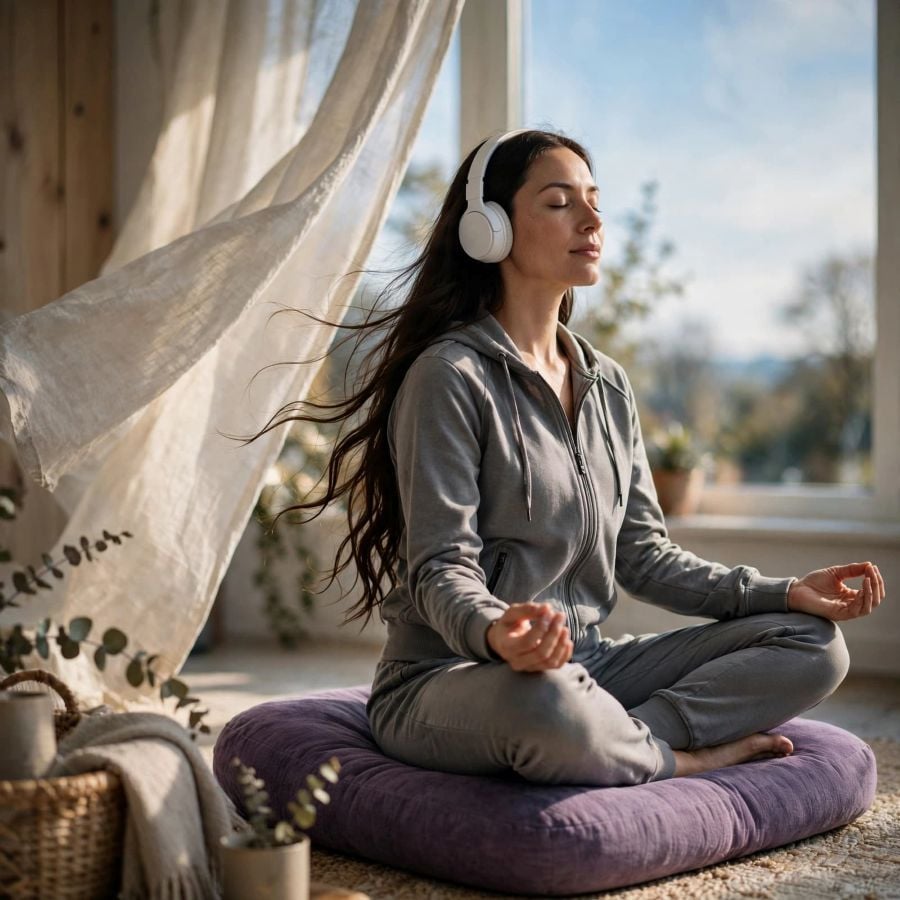
Sometimes, sitting in silence to meditate isn’t as easy as it sounds. Thoughts about the day can keep popping up, making it hard to settle into the present moment. A little background music can offer a soothing sensation for mind, body spirit, giving us a cue it’s time to breathe it all out and start to relax.
A gentle piece of music, perhaps nature sounds or even a guided meditation with music can be helpful when the mind just won’t slow down.
In this guide, we’ll explore simple ways to use meditation and healing music, from mindful listening to guided meditations. We’ll look at different sounds to try, the role of music in relaxation, and the traditions behind healing frequencies.
Key Takeaways
- Meditation and healing music offer a simple way to bring sound into your meditation practice, whether you enjoy instrumental music, nature sounds or gentle melodies.
- Mindful listening, slow breathing and guided recordings are easy ways to get started.
- Comfort matters more than choosing a particular genre or frequency, and silence is always an option too.
- Music may be a helpful addition to a relaxing routine, although experiences can vary from person to person.
- A comfortable space, a volume that feels right and a few quiet minutes are enough to begin.
Exploring Meditation and Healing music
You can explore meditation and healing music in a few simple ways. Picking just one is a great place to start. Not sure where to begin? Choose an approach that feels right for you:
Looking for a quiet moment? Try listening to gentle music or nature sounds without doing anything else.
Finding it hard to settle? Pair music with slow breathing or a gentle body scan.
Prefer some guidance? Try a guided meditation with background music.
Enjoy voices or sounds with a spiritual feel? Explore chanting, mantras or a sound bath recording.
Try Mindful Listening

Mindful listening is a simple way to bring music into meditation. Find a comfortable spot, press play and give the sound your attention. Notice the melody, rhythm or small details you might usually miss.
When thoughts come up, there’s no need to push them away. Gently bring your attention back to the music whenever you’re ready.
Pair Music With Breathing or a Body Scan
Music can provide a gentle focus while you practise slow, comfortable breathing. Choose a track you enjoy, settle into a relaxed position and let your breathing find its own easy rhythm.
You could also try a body scan. This involves bringing your attention to different parts of the body, noticing any sensations without needing to change them. Soft background music may help create a comfortable atmosphere for the practice.
Try a Guided Meditation, Chant or Sound Bath
Guided meditations, chants, and sound baths each bring a different experience to a session.
Guided meditation: being guided means you don’t have to think about each step. It’s sometimes easier to just follow along.
Humming or chanting: humming works well if you like using your voice. Chanting goes a step further by giving your mind a focused phrase to hold onto.
Sound bath: this involves listening to sustained tones, often from singing bowls or gongs. A recording works well too, so there’s no need to buy an instrument. Although using one can be part of an immersive experience.
How Do You Choose Music for Meditation?
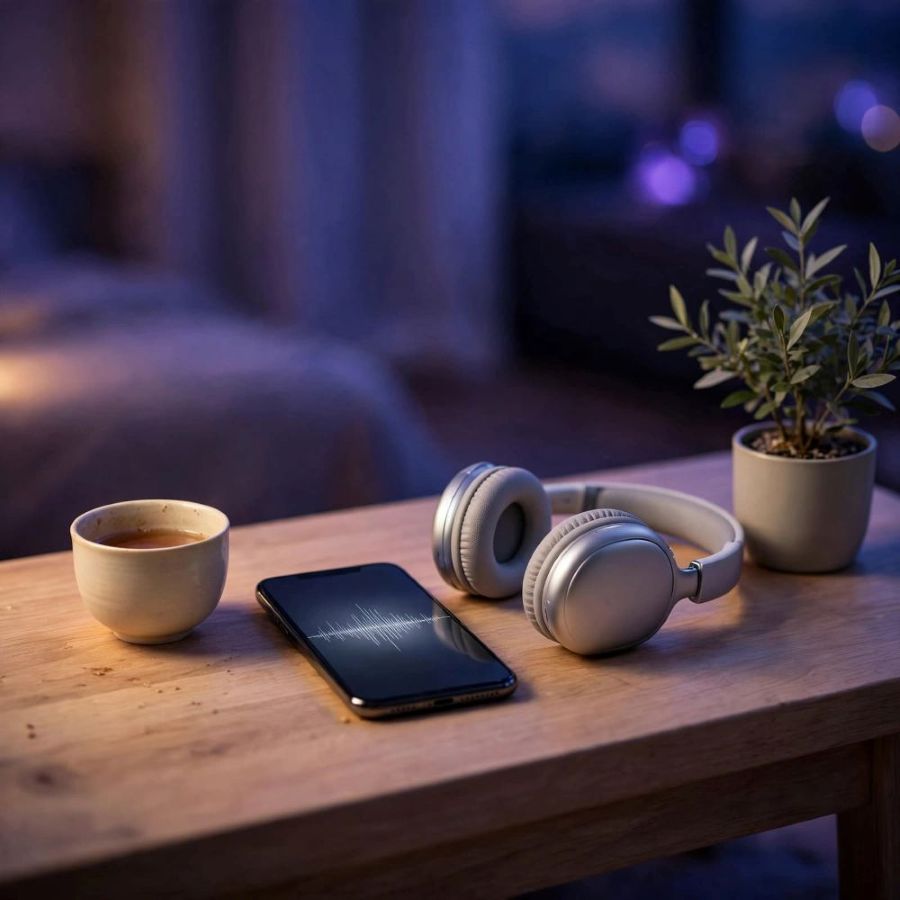
There’s no single type of music that works for everyone. The best choice is often music you enjoy and find comfortable to listen to.
Here are a few options to explore:
Nature sounds: Rain, flowing water, birdsong and ocean waves can provide a gentle focus during meditation.
Instrumental or ambient music: Soft melodies without lyrics may be a good choice if you prefer fewer distractions.
Slow, steady rhythms: Some people prefer music with a consistent rhythm to accompany slow breathing or a relaxed meditation.
Try listening to one track at a time and notice how it feels. You might prefer familiar music one day and something new the next. There’s no need to find the perfect track; choose something that suits the moment.
What Are Healing Frequencies and Sound Healing?
Healing frequencies and sound healing are terms often used in holistic wellness to describe different ways of working with sound. These may include singing bowls, tuning forks, gongs, chanting and music tuned to particular frequencies.
For example, 432 Hz music is sometimes associated with relaxation, meditation and spiritual practices. Other sounds and frequencies are also used in sound healing traditions. People may choose them as part of a personal meditation practice or simply because they enjoy the way they sound.
You may come across descriptions of certain frequencies as having special healing properties. While these ideas are part of some sound healing traditions, there isn’t enough evidence to say that one particular frequency has a special healing effect. You can still explore different sounds and decide which ones you enjoy using in your own practice.
What Is Music Therapy, and How Is It Different From Healing Music at Home?
Music therapy is a professional practice in which a trained music therapist uses music to support a person’s individual needs and goals. It can involve listening to music, singing, playing instruments or creating music together. Here are at least 2 different approaches used in music therapy.
The Bonny Method: developed by Helen Bonny, this approach for example, uses music as part of a guided process involving imagery and personal reflection.
Nordoff-Robbins music therapy: approach uses music-making between a therapist and client as part of the therapeutic process.
Listening to meditation music or sound healing recordings at home is different from professional music therapy. Home listening can be a personal wellness activity, while music therapy involves working with a trained professional toward individual goals.
What Does Research Say About Music and Meditation?
Research has explored how music may affect anxiety, including in healthcare settings. Two reviews offer some useful context:
A 2025 review of 51 studies found that music therapy was associated with lower self-reported anxiety. Changes in physical measures, such as heart rate and blood pressure, were small and not statistically significant.
A 2024 review of 11 randomized controlled trials involving 1,204 adults having cardiac catheterisation found lower anxiety among those who received music-based interventions. However, the review did not find significant changes in heart rate, breathing rate or blood pressure.
These findings are encouraging, but both reviews focused on healthcare settings rather than everyday meditation at home.
Making Your Listening Space Comfortable
To get the most out of your audio, keep a few easy ideas in mind:
Set a soft volume so the sound supports your focus without overwhelming it.
Leave headphones off, if alarms, traffic, or caregiving sounds matter.
Avoid listening while driving or doing tasks that need full focus.
Rest in a comfortable seat or lie down with a blanket.
If a song feels off or distracting, just switch to another piece of music that’s more soothing and grounding.
FAQ on Meditation and Healing Music
How long should a music meditation session last?
Five minutes is plenty for starting out. As you get comfortable, feel free to build up session time to match your schedule.
Is meditation better with music or in silence?
Neither is better than the other. Music can give us a helpful cue to follow, while silence leaves room to notice breath, sensations, and surrounding sounds. Try two short sessions side by side to see which feels right for you.
Do headphones make a difference?
It depends on the audio. Room speakers work fine and help you stay aware of your environment. Standard headphones offer a more immersive feel. However, they’re only necessary for binaural beats, which rely on sending separate tones to each ear.
What should a beginner listen to?
Guided tracks with background music or nature sounds are a great starting point as spoken words give the mind a structure to follow along with. Grounding and soothing instrumental tracks are another great choice.
Special “healing” labels aren’t strictly necessary, unless you love the idea and connection between symbolism and chakras in energy work.
Is healing music a form of music therapy?
Not on its own. Music therapy is delivered by a trained professional and tailored to individual needs. Healing music listened to at home is a form of self-guided relaxation.
Where Will You Start With Meditation and Healing Music?
Meditation and healing music can begin with one comfortable spot, one soft sound, and a few quiet minutes. Even each session can feel a little different if you want it to, especially while experimenting. And even seasoned meditators like to mix it up a bit with different sessions.
Just pick one starting point from this guide if you like, and give it a go. Then notice what feels easy and inviting, and keep that part of it. If it brings a moment of inner peace, wonderful. If not, silence is a perfectly good alternative too.
Related reading: