Originally written in 2021, fully updated on 2 February, 2026.
Have you ever wondered if self hypnosis for change could empower the new you? Transformation doesn’t always happen through willpower alone. When we settle into a calm, attentive state, some people find it creates room to observe and explore reshaping thoughts and behaviors. These intentions may align more with who we want to be personally and professionally. It’s not mind control. It’s a bit like mindfulness work that allows us to mentally explore ways to develop ourselves.
This guide covers what self-hypnosis is, and how it’s used to support any changes we’d like to work on. We’ll also look at scripts and audios, common problems, and when to work with a hypnotherapist.
Key Takeaways on Self-Hypnosis for Change
- Empowering the “new you” involves clearly defining who you want to become. Intentionally practicing thoughts, behaviors, and emotional responses that support that identity. Using various tools like self-hypnosis, journaling, and affirmations.
- Self-hypnosis is a self-guided practice. Usually done at home, being in a relaxed yet focused state of attention to work toward personal goals. Engaging both the conscious and subconscious mind.
- Small actions after each session, such as pausing to notice subtle internal changes. Writing them down, helps to reinforce awareness and track patterns over time.
What Is Self-Hypnosis?
(and What It Isn't)
Self hypnosis is a calm yet focused state of mind that is used to help us with being more receptive to our desired vision. It’s not mind control and will never make us act against our values or morals.
While experiences and results vary, many report that regular sessions help support shifts in behavior, attention, and emotional responses over time.
How Does Self Hypnosis Work?
It works through directed attention and calm. By guiding the mind into a deep state of relaxation using methods like slow, deep breathing, counting down, visualization or concentrating on a single point. Once there, the mind usually feels more open and receptive to affirmations about the behaviors or mindset we want to develop.
This state—sometimes called auto-trance or a self-induced trance—uses repetition and attention with the intention of strengthening new mental patterns. Think of it as mental rehearsal: just like athletes visualize success, we’re developing desired thoughts, behaviors, and emotional responses.
How Does
Self-Hypnosis Differ from Meditation?

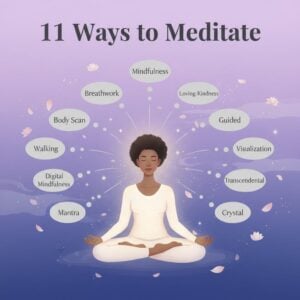
While both involve calm and attention, they serve different purposes. Meditation is typically about being present, observing thoughts without judgment, and cultivating mindfulness. Aimed at awareness and peace. You can learn more about hypnosis vs meditation here.
Self hypnosis, in contrast, is more directive. It’s designed to put us in a focused state where we can give ourselves cues, affirmations, rehearse responses, exploring the identity we’re moving toward. People often use this mindset tool to build confidence, success, manage anxiety. Also address patterns like emotional eating, improve sleep, or reinforce self-esteem.
Both have benefits. A hypnotic state is more active and purposeful when working on goals and unwanted habits.
What Can You Expect in a Self Hypnosis Session?
A self-hypnosis session usually means we’re practicing hypnosis without a one-to-one session with a clinical hypnotherapist. It means we’re typically listening to an audio to help guide us along.
This can either be a track we’ve recorded in our own voice or a pre-made audio from a clinical hypnotherapist. Most people spend 5-30 minutes following the structured process detailed in the step-by-step guide below.
How Does Self-Hypnosis Help You Become Your New Self?
Self-hypnosis helps us become our new self by creating familiarity with an identity we haven’t fully stepped into yet.
When we repeatedly experience being that person in our sessions—even mentally—it stops feeling like a distant goal and starts feeling like a version of ourselves we’ve already inhabited.
This bridge between imagination and reality makes the transition feel less like a dramatic leap. And more like a natural progression into who we’re aspire to become.
How Does It Help Rewire Habits and Behavior?
Self-hypnotic cues help redirect old unwanted habits and behavior by interrupting the default loop between trigger and response. It’s like creating a new pathway in the brain while getting the old one to take a back seat. Here’s more on studies about how hypnosis affects brain activity.
When we consistently practice new responses in our focused state, these fresh pathways become more accessible, gradually replacing our automatic reactions with the behaviors we’re choosing to develop.
Identity-Based Change: Practicing Who You're Becoming
Identity-based change is about shifting how we see ourselves at our core, not just what we do.
Instead of saying “I’m trying to be healthier,” we practice being someone who IS healthy.
Instead of “I want to be confident,” we embody someone who IS confident.
Self-hypnosis lets us step into this identity during our sessions. Feeling what it’s like to be that person, thinking their thoughts, making their choices.
This empowers the new you by making the identity shift feel real and lived, not aspirational.
When we’ve already experienced being that person in our focused state, stepping into it in daily life feels less like pretending and more like returning to who we actually are.
Building New Mental Patterns Through Repetition
I’m sure many of us have heard of the old saying “repetition is the mother of learning a new skill”?
The same goes for building new mental patterns. After all, learning a new skill is part of building that new mental pattern, right?
We can’t expect to shift into our new identity overnight without real commitment.
Daily repetition is what transforms our focused affirmations from conscious effort into automatic thinking. It’s not about perfection; it’s about showing up consistently.
Each session reinforces the pathways we’re developing. The more we repeat, the more natural our new identity is as we step into it.
This is where commitment meets transformation. It’s not about one powerful session, but through steady, repeated practice over time.
How Do You Practice Self Hypnosis? (Step-by-Step General Info Guide)
Here’s a general approach for people who use self hypnosis at home. Below are some simple steps when using hypnotic prompts toward our goals. Or you can jump straight to the video learning session about hypnosis.
Prepare Your Space and Mind
Choose a quiet spot with minimal distractions. Switch the phone off. Sit or lie comfortably where our body can take nice paced breaths initially. Decide on a one-line affirmation that reflects our identity, such as:
“I respond calmly and confidently in every situation.”
Set a gentle timer for 5–30 minutes. We can even try priming the mind to wake us up within 30 minutes? It might even surprise you at how responsive the mind can be with instructions and cues to wake up.
Optional: use headphones if we prefer an audio guide. This setup signals our mind it’s time for our session and when to come out of our session as well.
Induction and Relaxation Techniques

Induction helps guide our attention into a calm, focused state. Options include:
Slow, deep breathing: Inhale for 4 counts, exhale for 6.
Progressive muscle release: Gradually release tension from head to toes.
Directed attention: Concentrate on a single point, sound, or our anchor word.
The aim is a light self-induced trance where we are fully aware but attention is narrowed and receptive.
Create Suggestions and Mental Rehearsal
Once calm, repeat our identity-aligned affirmation in present tense and first person. Keep it short and believable. Example:
“I direct my attention to one step at a time. I complete each task calmly and steadily.”
Optionally, combine this with visualization: imagine ourselves performing the behavior successfully. The intention is to strengthen mental patterns and reinforce the mindset we’re developing.
Returning to Alertness
End our session by gradually bringing attention back:
Count up slowly (1 to 5) while deepening our breath.
Gently open our eyes and stretch.
Take one tiny action that reflects our session, like standing up calmly or beginning the next task on our list.
This gentle closing process from our inner work helps us move back into a fully alert conscious state. Focusing on the present moment.
Finding
Self-Hypnosis Scripts
and Audios for Personal Change
Using the right scripts or audios can make self-hypnosis easier to follow and more rewarding. Ask yourself:
Which habit or mindset is holding me back from becoming my new self?
What part of the “old me” do I want to shift first?
Do I want to strengthen confidence, improve consistency or move toward success?
Focusing on the area that matters most ensures each session strengthens the changes you’re actively working on.
Where to Find Quality
Pre-Recorded Hypnosis Audios
When selecting pre-recorded hypnosis audios, look for creators with a clinical hypnotherapy background.
Choose tracks that resonate with your current state and the changes you want to make in your “new you.”
Focus on audios that target the specific mindset or habit you’re working to develop, so each session reinforces the version of yourself you’re aiming to become.
Here’s a platform I used years ago, featuring professional clinical hypnotherapists with well-established and respected reputations.

Common Problems and Solutions
What If You Can't Relax?
It’s common to feel restless or tense when it’s you’re first hypnotic state. We don’t need to achieve total relaxation to experience the benefits. We can use techniques like breathing slowly and deeply, a brief body scan, or counting down from ten. Even small moments of calm allow us to reinforce suggestions and engage the subconscious.
What If You Fall Asleep During A Session?
Falling asleep occasionally is normal. A light trance can feel similar to dozing. If your goal is alert mental rehearsal, consider practicing at times when you feel naturally awake. Also by sitting upright in a supportive chair, or shortening sessions to 5–10 minutes.
What If Your Mind Keeps Wandering?
Distractions happen. To refocus, try using an anchor word or gesture. Returning your attention to your chosen suggestion, or using shorter sessions more frequently. Guided audios are helpful with focusing.
What If You Feel Silly or Self-Conscious?
Feeling self-conscious is common, especially when doing it alone and trying something new. Reframe the session as mental training or rehearsal, focusing more on the outcome. Using your own voice or a pre-recorded audio can make it feel more structured. Over time, comfort grows as the session becomes familiar and purposeful.
Knowing When to Get Extra Support
Self-hypnosis can be a helpful tool for everyday growth, but it is not a replacement for medical or mental health care. If there’s ongoing distress or emotional difficulty or illness, seeking help from a qualified professional is an important part of self-care.
When Should You Work With a Hypnotherapist?
Working with a trained clinical hypnotherapist can be valuable when additional guidance, structure, or support is needed. They can assist with some complex habits, mental blocks, or identity-based shifts that may be difficult to navigate independently. Professional sessions often include tailored scripts, feedback, and various techniques for addressing challenging patterns.
What Does the Research Say?
Studies suggest self-hypnosis can support habit change, stress reduction, sleep outcomes, confidence, and other personal goals. Its effectiveness varies. Some benefit more than others.
The mechanism is tied to neuroplasticity. Repeated mental rehearsal strengthens neural pathways that align thoughts, behaviors, and emotional responses.
FAQs About Self-Hypnosis for Change
What does empowering the new you mean?
Empowering the new you means intentionally defining who you want to become. Then actively practicing the thoughts, behaviors, and emotional responses that support that identity. Using various mindset tools like hypnosis, journaling affirmations and more.
What is self-hypnosis?
Self-hypnosis is a technique you practice on your own, usually at home rather than in a one-to-one session with a hypnotherapist. It involves using relaxed yet focused attention to work toward specific goals, engaging both the conscious and subconscious mind.
What tiny action should I take right after each session to reinforce the "new me"?
Take a moment to notice what’s different.
Stand in front of a mirror, look at yourself, and ask “What feels different about me right now?”
“How do I feel compared to before the session?”
Notice any subtle shifts in your mindset, energy, or confidence?
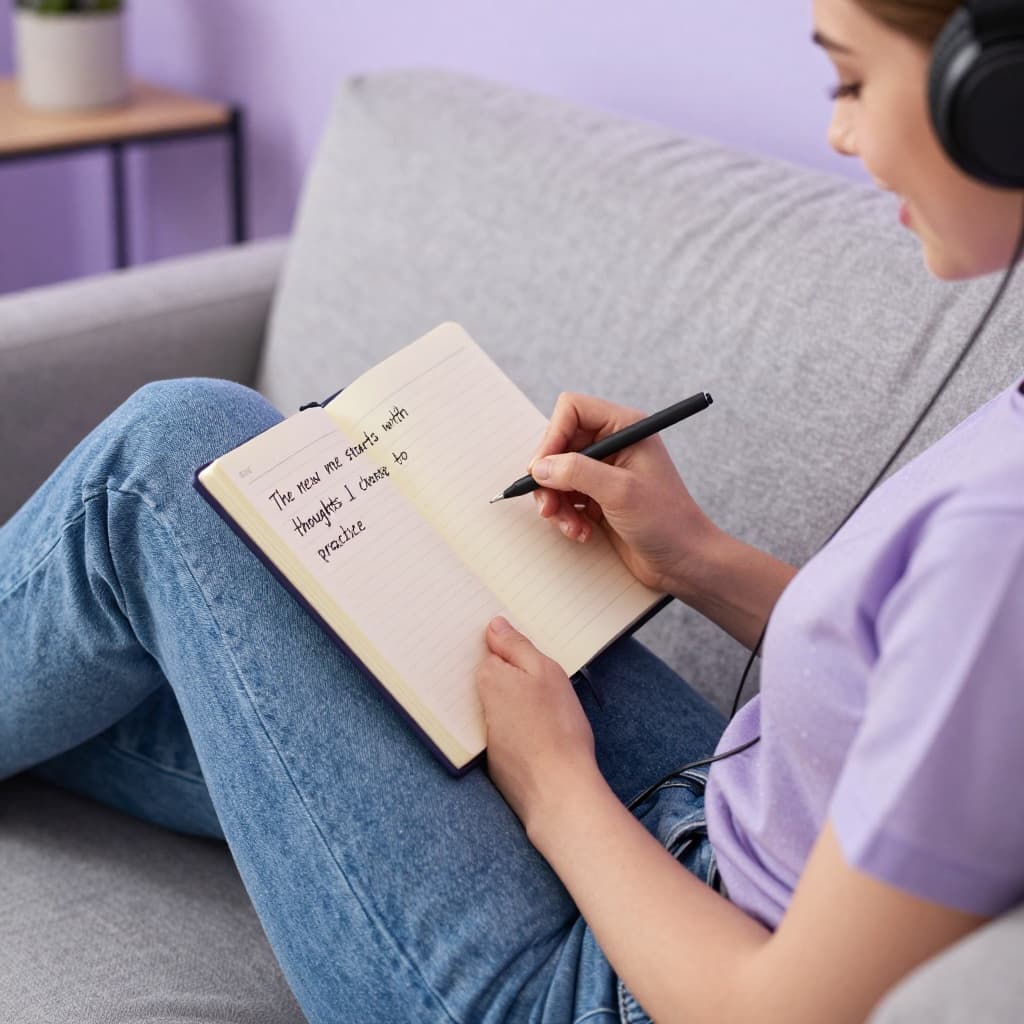
Then jot them down in a journal to track observations. These small notes can help you notice patterns you’re exploring. Tracking makes improvements more tangible. Helping you identify patterns. As well as supporting motivation as you see the gradual progress toward the “new you.”
So, if you like the idea of journaling like I do, here’s one I personally love to use as my vision planner.
Building Your
7–14 Day Routine
A short, structured routine helps establish consistency and reinforces the new behaviors you’re practicing. Start with 7–14 days to see how the practice fits into your schedule. Each session can be 5–20 minutes, ideally at a similar time each day.
Pick a desired outcome—like improving follow-through, calm focus, or confidence. Use an audio to guide your session. Over time, repeated sessions reinforce mental patterns. Helping make new behavioral shifts feel more natural in daily life.
Starting Small and Staying Consistent
Focus on manageable actions rather than trying to overhaul everything at once.
One short session a day is more effective than long, infrequent sessions.
Pair self-hypnosis with small, real-world actions aligned with your goal.
Example—like taking one calm breath before responding to a situation or completing a single micro-task.
Consistency builds momentum, while starting small ensures the practice is sustainable and reinforces your “new you” over time.
Eason, A. D., & Parris, B. A. (2019). Clinical applications of self-hypnosis: A systematic review and meta-analysis of randomized controlled trials. Psychology of Consciousness: Theory, Research, and Practice, 6(3), 262–278. https://doi.org/10.1037/cns0000173
Hammond D. C. (2010). Hypnosis in the treatment of anxiety- and stress-related disorders. Expert review of neurotherapeutics, 10(2), 263–273. https://doi.org/10.1586/ern.09.140
Hasbi, M., & Effendy, E. (2019). Hypnotherapy: A Case of Anxiety Person Who Doesn’t Want to Use Medication. Open access Macedonian journal of medical sciences, 7(16), 2698–2700. https://doi.org/10.3889/oamjms.2019.820
Williamson A. (2019). What is hypnosis and how might it work?. Palliative care, 12, 1178224219826581. https://doi.org/10.1177/1178224219826581