Originally written in 2020, fully updated in 2nd February, 2026.

If you’re struggling with social anxiety, you’ll know the challenges it can bring into your daily life. The difficulty of concentrating at work or even trying to get to sleep at night are just some examples. So when your practising self hypnosis for anxiety at home, can ready-made audios be helpful aids?
We’ll also look at how audios differ from scripts written by professional hypnotherapists.
These tools don’t replace professional or personal care. They’re usually paired with existing supports and, at times, between one-to-one in person sessions.
So let’s dive in and discuss the benefits of using ready made hypnosis audios and pre-written scripts. Many people usually use them as mindset management tools, helping with working toward new goals. These goals can include things like wanting to feel more calmer, more focused, and clearer in social situations.
Key Takeaways: Self-Hypnosis for Anxiety
- Ready-made audios provide a convenient way to experience self-hypnosis at home. Many audios are usually created by clinical hypnotherapists helping you follow a guided pace and structure.
- Pre-written scripts differ from audios. Scripts are text you can read or record yourself, while audios provide timing, tone, and pacing guidance.
- Personalized sessions are considered when:
- General recordings do not address specific situations or triggers
- Multiple stressors make a tailored approach more practical
- Previous self-guided methods feel repetitive or less useful
- You prefer guidance adapted to your current circumstances
What is self hypnosis for anxiety?
At its core, self-hypnosis is a self-directed technique that combines deep physical relaxation with focused mental attention.
It isn’t about being “asleep” or losing control. Instead, it’s a state of active concentration. It’s abit like when you’re so absorbed in a movie or a book that you tune out the world around you.
When used for anxiety, it allows you to intentionally quiet the “noise” and ruminating thoughts so you can focus on more helpful, calming suggestions.
How the basics of the process usually work:
- Relaxation: Using breathing or muscle relaxation to calm the physical body.
- Focus: Narrowing the mind’s attention to a single idea, image, or the sound of a voice.
- Suggestion: Introducing specific, helpful thoughts or “scripts” while the mind is in this relaxed state.
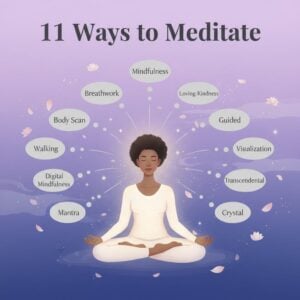
How it differs from guided meditation
Both help to relax, but the aim is somewhat different.
- Mindfulness guided meditation: trains awareness and non-judgement. You notice thoughts and let them pass.
- Hypnotic suggestions: not only use relaxation but also focus on shifting unwanted patterns and supporting goal-focused intentions.
If you are curious about differences in practice and benefits, then here’s a post that covers this more indepth: hypnosis vs meditation for anxiety relief.
What a typical audio includes
Most hypnotic audios follow a simple structure like:
- Induction: relaxing the body, slowing the breath. Allowing your attention to start to settle on the breath or the voice.
- Deepener: usually stepping deeper into ease, often with counting or some visual imagery.
- Any therapeutic suggestions: calming the thoughts, safety cues, or encouraging a more balanced self-talk.
- Rehearsal or imagery: the practice of feeling steady in a typical situation.
- Emerge: returning to normal alertness. Or even drifting off to sleep if designed as a bedtime sleep routine.
Are ready-made audios helpful for self hypnosis for anxiety?
Ready-made audios can provide structured guidance and pacing for those practicing at home. While they’re often a practical and accessible starting point, they are not a replacement for personalized, professional care.
Research suggests hypnosis can help with reducing anxiety for individuals, especially when combined with other types of support. For more on this, see Hammond’s review on anxiety and stress-related conditions and review of using hypnotic suggestions as an add-on approach in clinical settings from APM.
When generic audios are a good fit
Many people find that ready-made audios are helpful aids for:
Managing everyday stress: Navigating mild anxiety or general mental overload.
Supporting personal and professional goal setting: Helping to strengthen a positive mindset to focus on a specific goal in life.
- Developing foundational skills: Learning the basics of breathwork and physical relaxation.
When personalised sessions may be better
Personalized sessions can be really helpful when:
- You have specific triggers that you’d like to address.
- You want content that’s more tailored to your story and goals.
- You tried generic audios for several weeks and haven’t found much progress.
- When there’s trauma or complex mental health needs.
Clinical guidance and tailored hypnotherapy can help with addressing those deeper layers. For insight on how personalization can be helpful with enhancing outcomes, here’s 2019 meta-analysis: PubMed review
Safety notes and expectations
- Never use hypnotic audios while driving or using machinery.
- Expect some mind wandering. Bring attention back with an easy cue. Something like “back to the voice” or “back to my breath.”
- Results can vary. Many people might notice the relaxation first. Then changes in thoughts and habits later.
- If anxiety spikes or you feel unsettled, always pause and consider professional guidance.
For another view on recorded audios, this overview can be useful: Do hypnotic audios really work?
Hypnosis for anxiety: Where MP3 audios fit in
Ready-made MP3s written by clinical hypnotherapists offer a structured track with preset pacing and cues.
- You can replay the same sequence to keep practice consistent.
- They’re convenient at home.
- They may be used with other techniques and modalities, depending on personal needs.
Practice at home vs. live sessions
Recorded Audio/MP3:
Provides a consistent sequence, allows for easy repetition. Offers total privacy. Generally the most cost-effective.
Often useful when: Building a daily routine, managing day-to-day stress, or learning basic breath and focus cues at your own pace.
Live 1-to-1 Sessions:
Offers tailored wording, interactive pacing, and real-time feedback from a professional.
Often useful when: Dealing with specific triggers, when progress has stalled, or for more complex personal needs.
Building a simple routine
- Use a set time daily, this makes it easier to keep the routine.
- Aim for 3 to 5 sessions each week to practise focused attention with your new suggestions.
- Sit or recline comfortably and switch your phone off during your time to relax and focus.
- Before you press play, start by breathing deeply. Slowly inhale, and long exhales, helping to settle the nervous system.
Self-Hypnosis for anxiety MP3 download: Helpful tips on what to look for
Creator credentials, script structure, and audio quality.
- Credentials: look for professionally trained hypnotherapists.
- Suggestion style: wording that includes positive affirmations and suggestions toward your goal.
- Tone and pacing: a tone of voice you can relax and resonate with always is helpful and makes it more pleasant to listen to and focus.
- Audio quality: clean sound, steady volume throughout.
- Session length: 10–30 minutes is a workable amount for most sessions. This really depends on your preference. Making it regular helps to strengthen your new message.
- Intent: choose an aim that matches your need (e.g., “ease social nerves,” “settle before sleep”).
Here’s more reading from the APA overview of modern hypnosis research and this summary of anxiety reduction outcomes from Frontiers in Psychology.
Tips to elevate each session
Small tweaks can make sessions more comfortable and effective.
Time of day and headphones
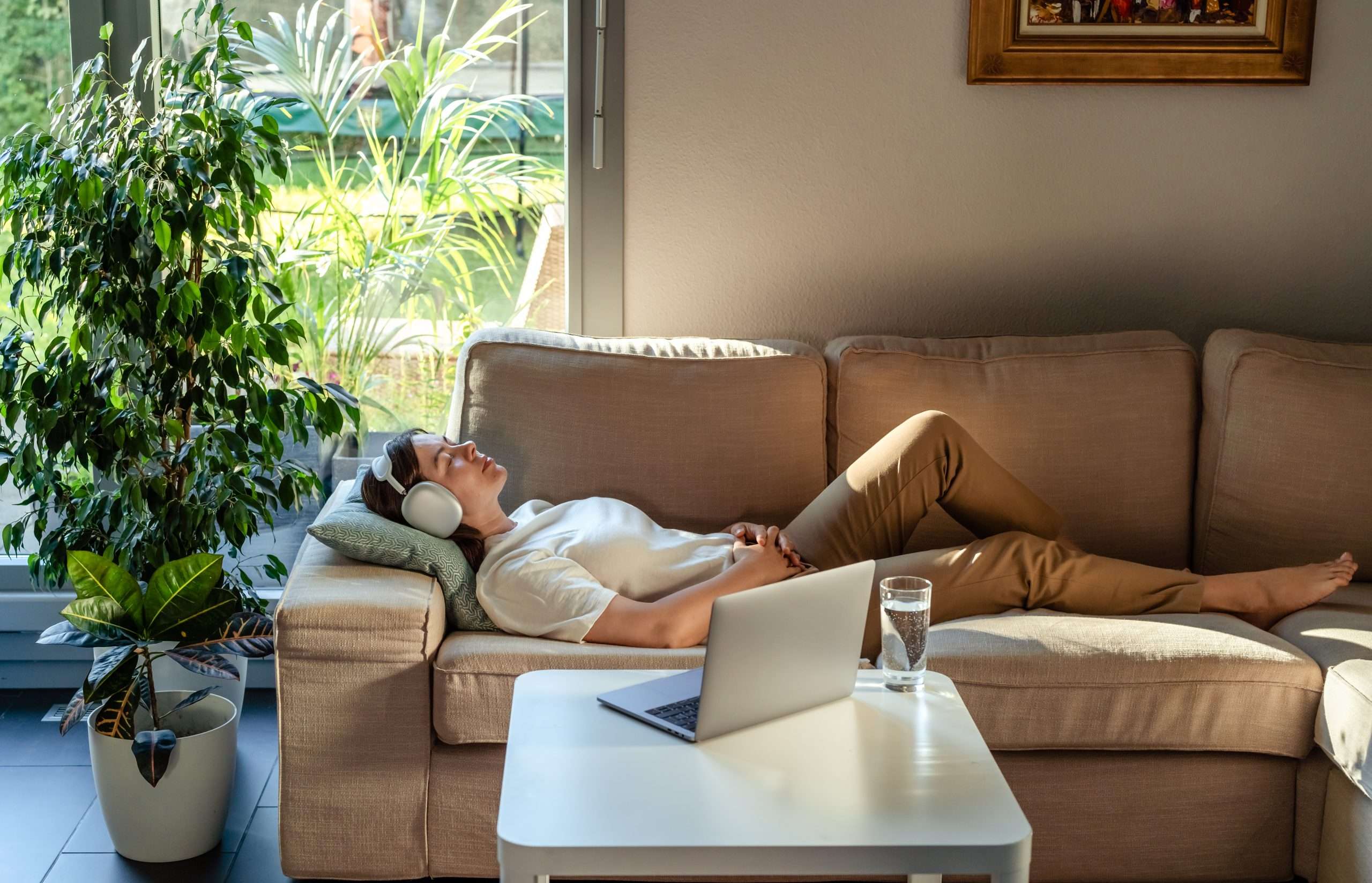
- Choose a time with minimal interruptions. A steady slot can support emotional regulation.
- Use comfortable, closed-back or noise cancelling headphones that help with reducing any outside distractions.
- If it helps, begin with brief a visualization or guided imagery to set the scene you want.
- Keep a light blanket nearby. As our heart rate and breathing slow down during deep relaxation, our body temperature often drops slightly, and staying warm helps us to remain focused.
- If you often fall asleep, you can try sitting upright with a cushion for support. Or choose a track which guides you back into the waking state.
Mind wandering or restlessness during session
Mind wandering or restlessness can show up during a session. The aim isn’t perfect focus; it’s a simple return to your anchor.
- An anchor phrase such as “return to calm” or “back to the voice” can be useful.
- Shift attention to breath counting for a few cycles.
- If the body feels restless, release on the exhale and lengthen the next exhale.
- If thoughts spiral, notice any negative thought patterns and re-settle on the breath or the voice.
- Treat this as building practical coping mechanisms you can reuse day to day.
- Many describe this as a self-induced trance—relaxed, focused attention.
- Some describe it as working with the subconscious mind while attention stays steady.
For broader context on entering calm states with practice, see transformative hypnosis trance practices.
FAQ About Self-Hypnosis for Anxiety
How often should I use a self-hypnosis audio for anxiety?
- Common routines using self hypnosis audios 3–5 sessions per week, approx 10–20 minutes each.
- Keep it steady for 2–4 weeks, then review what seems helpful.
- Track “before” and “after” on a 1–10 scale to spot any patterns.
- If progress stalls or needs are specific, then one-to-one hypnotherapy with clinician input can tailor wording for you.
Can I use hypnosis for anxiety while falling asleep?
For bedtime, a sleep-friendly track without an “energizing emerge” often fits best.
Simply set a sleep timer and keep the volume at a low, soothing level.
If you find yourself frequently drifting off, using a track specifically designed to fade into a restful sleep can help you transition naturally through the night.
Are ready-made audios helpful for self hypnosis for anxiety?
They can serve as convenient at-home practice for relaxation or for focusing on particular goals. They also serve sometimes as part of a broader support plan.
When is a personalised session worth considering?
Ready-made tools are great for general relaxation and goal-setting. However, a tailored approach is often worth considering if:
- Specific Triggers: Your situation doesn’t quite fit the scenarios described in general recordings.
- Layered Stressors: You are navigating multiple life challenges at once and would like more personalized and professional support.
- Stalled Progress: You’ve used DIY methods for a while but feel you have reached a plateau.
- Need for Customization: You find that standard scripts and audios don’t resonate with your current life stage and could benefit from the tailored approach of a professional clinical hypnotherapist.
Reviews of research suggest hypnosis often works better as part of a broader plan. Here’s the findings in this 2019 review and this 2010 overview of anxiety treatment with hypnosis.
More overviews from PubMed, 2019 meta-analysis, APA’s summary of hypnosis research, and Frontiers in Psychology
What’s the difference between an audio and a pre-written script?
Ready made audios guide pace and tone. Scripts are written text usually by clinical hypnotherapists, you can choose to read and record in your own voice.
References and extra reading
- Hypnosis may help reduce anxiety, especially when used with other approaches: 2019 meta-analysis on efficacy.
- Overview of evidence and applications: APA summary of clinical hypnosis.
- Exam anxiety and student outcomes: Frontiers in Psychology review.
General perspective on recorded hypnosis: Do hypnosis audio recordings really work?
Final Thoughts on Self-Hypnosis for Anxiety
Ready-made self-hypnotic audios can be helpful at-home options alongside other routines. The sessions centre on a relaxation routine, breathwork, and balanced self-talk for everyday anxious feelings.
They’re easy to repeat, so calmer responses can feel more familiar over time. Keeping the expectations realistic.
They may be used with other approaches, depending on personal needs.
If anxious feelings are persistent or intense, always first consider professional support.
Disclaimer: Our web pages and blog posts provide general information for general purposes only and not to be used for any medical, legal or alternative health advice for any type of physical, mental health or financial concerns.Always speak to your practitioner before embarking on any new alternative treatments. If you have concerns about any medical matters, you should always consult your healthcare provider without delay.We thank you for taking full responsibility for your own health and wellbeing in life. ☺