
Written on 26th December, 2021. Updated on 3rd November, 2026.

How long should you meditate to see results? It’s a useful question when starting meditation or wondering whether your current sessions are long enough.
Five minutes can be a comfortable place to begin. Ten to twenty minutes offers more time to settle into a meditation practice, whether that’s breath awareness or a guided session.
Session length is only part of the picture. How often meditation happens and the technique being practised can also shape the experience.
Let’s explore different meditation lengths, how soon changes might be noticed and ways to find a routine that fits comfortably into everyday life.
Key Takeaways
Five minutes offers a good starting point, especially when you’re starting out.
10 to 20 minutes a day allows for a longer, uninterrupted session, having more time to settle into the practice without feeling rushed.
Regular practice offers opportunities to pause, become more aware of thoughts and emotions, and bring greater mindfulness into everyday life.
How Long Should You Meditate Each Day?
Some days are busier than others, and finding time to meditate can depend on what you’ve got planned.
You might only have a few minutes before the morning rush. On a quieter day, there may be more time to unwind, feel grounded and enjoy a little peace and quiet just for yourself. Your meditation time can change to fit around your day.
Let’s look at what different session lengths can offer.

Is 5 Minutes of Meditation Enough?
Five minutes can be just enough for a short meditation. It’s a lovely way to set the tone for your day without needing a lengthy session.
Perhaps it’s those quiet minutes before getting out of bed, when the world seems still for a moment. Or maybe it’s a short afternoon break to ground yourself, reset and recharge.
Find a quiet spot, even a peaceful corner of the park, and take a moment to notice your natural breathing. Pay attention to how you feel with each inhale and exhale.
And if your mind starts running through that never-ending to-do list, gently remind it that those tasks will be completed in good time. You’ve got this. For now, enjoy this little self-care moment of connecting within
Is 10 Minutes of Meditation a Day Enough?
Moving from five to ten minutes can be a nice next step when you’ve got a little more time to enjoy a meditation session.
Those extra minutes offer room for some quiet self-reflection. Perhaps you’d like to repeat a meaningful mantra or focus on a special word to carry into your day. Or maybe spend a little time visualising how you’d like your day to unfold.
Another option is to spend those ten minutes practising mindfulness meditation, bringing your attention to the present moment.
A ten-minute session can fit nicely into a morning routine. It can also offer a peaceful moment before bed, giving you time to relax and unwind after a busy day.
Is 20 Minutes of Meditation Enough?
Got a little more time to yourself? Twenty minutes can be a welcome opportunity to slow down and enjoy some uninterrupted self-care.
With that extra time, perhaps you’d enjoy a longer meditation or simply sit quietly with your thoughts. There’s room for a little self-reflection, noticing what comes up as the session unfolds.
Afterwards, why not take a moment to write in your journal? There might be a thought, feeling or personal reflection you’d like to remember.
Interestingly, research comparing single 10- and 20-minute mindfulness meditation sessions found similar increases in reported present-moment mindfulness after both durations.
It’s a nice reminder that even with shorter meditation sessions, we’re still making time for a little self-care.
How Soon Can You See Results From Meditation?
The time it takes to notice results from meditation depends partly on what we’re hoping to experience. The length of each session, how often we meditate during the week and how each person responds to the practice can also make a difference.
Feeling more settled after a quiet session may happen sooner. Developing greater concentration can take more time. So can noticing changes in how we respond to stressful situations in everyday life.
A study of 10-minute daily mindfulness meditation found that participants reported less stress after two weeks. By week five, they also felt better able to cope with stress.
What Might You Notice After One Meditation Session?
After just one meditation session, there may be a welcome feeling of calm. The mind might feel a little less busy, making it easier to return to daily activities with a clearer head.
Physical relaxation may also become noticeable. Breathing might settle into a slower, more comfortable rhythm, while tension around the shoulders or jaw may begin to ease.
Sometimes, the biggest change is simply becoming more aware of how the mind and body feel. Even a short session offers an opportunity to slow down, enjoy a quiet moment and reconnect with the present.
What Might Change After Several Weeks of Meditation?
Over several weeks of regular meditation, changes may become noticeable in attention, mood and responses to stress.
A study of 13-minute daily guided meditation sessions found improvements in attention, memory and mood after eight weeks of practice. These changes were observed at the eight-week assessment rather than after four weeks.
The findings offer an interesting example of how measurable changes can develop through continued meditation.
In everyday life, progress might look like noticing distractions sooner, becoming more familiar with emotional responses or returning your attention to a task with greater ease.
Keeping a simple meditation journal, like this one, gives us space to freely jot down thoughts, feelings or reflections after each session. Looking back over these notes can help us recognise patterns as our practice develops.
Should You Meditate Every Day?
Meditating every day can help build a regular habit. However, daily practice isn’t essential to experience benefits.
Making meditation part of a familiar routine can make it easier to return to. It can become something we do regularly, rather than only when life gets stressful.
Regular sessions also give us more opportunities to practise focusing our attention. They help us become more aware of our thoughts and emotions.
Over time, this may help us recognise when stress is building. We may then find it easier to pause before reacting.
Meditation teacher Mingyur Rinpoche encourages the idea of short times, many times. He shares this through the Tergar Meditation Community’s guidance on meditation frequency.
His teaching is a lovely reminder that consistency doesn’t always mean finding a long stretch of time to sit still. Brief moments of mindfulness throughout the day can complement regular meditation sessions without turning it into a formal practice.
And if meditating every day doesn’t fit comfortably into the week, a few planned sessions can still offer time for mindfulness and self-care.
Can You Split Meditation Into Two Shorter Sessions?
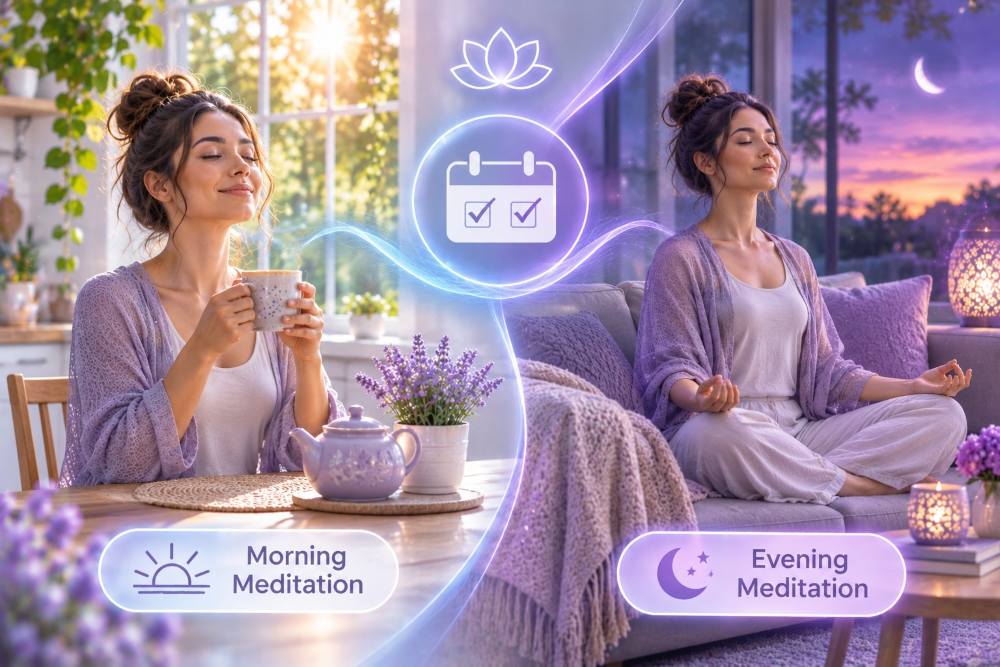
Yes, dividing meditation time into two shorter sessions can be a practical option. Finding twenty uninterrupted minutes to sit still isn’t always easy, especially on a busy day.
Instead, you could meditate for ten minutes in the morning and another ten in the evening. This can make meditation easier to fit into a daily routine.
Having two separate sessions also offers a chance to pause at different points throughout the day. Perhaps a little quiet time before things get busy, followed by another opportunity to unwind later on.
There’s also room to explore different techniques. A short breath awareness meditation might suit the morning, while a gentle guided meditation could be a lovely way to finish the day.
Both sessions offer dedicated time for meditation without needing to rearrange the entire day.
How Can You Choose the Right Meditation Duration?
Choosing the right meditation duration starts with considering your available time, your experience and what you need from the session.
A short breathing practice can fit comfortably into five minutes, offering a quiet pause when abit of anxiety starts to creep in. Longer options, like a guided body scan, loving-kindness meditation or sleep audio, naturally take a bit more time.
Alternatively, walking meditation offers a wonderful way to have your session as opposed to sitting still.
Consider how much uninterrupted time you have and pick a style that fits naturally. If you prefer not to watch the clock, a meditation timer can be helpful.
For those who enjoy meditating with sound, a portable electronic singing bowl, like this one, offers gentle sounds with a built-in timer. It has settings for 15, 30, 45 or 60 minutes and switches off automatically when the session ends.
Our guide to meditation tools for beginners also explores useful accessories for comfort, focus and setting up your practice.
When Should You Increase Your Meditation Time?

A good time to increase your meditation time is when you’re feeling comfortable with your current sessions and would enjoy staying a little longer. Perhaps you’ve found a technique you really enjoy and would like more time to explore it.
If five minutes has been working well, try adding another two or three minutes. Gradually extending your sessions gives your mind and body time to adjust without feeling rushed or uncomfortable.
Physical comfort matters too, especially when sitting for longer time frames. Adjust your posture or use meditation cushions and supports to help ease pressure on your joints. A comfortable chair is another option.
Keeping a meditation journal can also offer helpful insights. Jot down how long you meditated, the technique you used and how you felt afterwards.
Over time, you might discover that shorter sessions suit busy mornings, while longer guided recordings feel more enjoyable in the evenings.
These little observations can help you decide when to extend your meditation time and make adjustments that fit comfortably into your life.
FAQs on How Long Should You Meditate?
Does Meditating Longer Help You See Results Faster?
Meditating for twenty minutes instead of ten doesn’t mean results will appear twice as quickly.
Longer sessions give us more time to settle into meditation, but they don’t automatically produce greater benefits. Research comparing single 10- and 20-minute sessions found similar improvements in mindfulness.
Consistency also matters. Returning to meditation regularly helps build a habit and gives us more opportunities to strengthen our focus and awareness over time.
How Can You Tell If Meditation Is Working?
Sometimes, the changes are quite subtle. Perhaps there’s a little more patience when things get frustrating or a greater ability to pause before reacting. These everyday moments can offer clues about how meditation is influencing our awareness.
What If You Don't Notice Results After a Few Weeks?
It may be worth exploring a different meditation technique or adjusting the session length. Consider what you’re hoping to gain from meditation and whether the current practice supports that intention. Some changes also might take a little longer to notice.
Final Thoughts: Finding Your Meditation Rhythm
So, how long should you meditate to see results?
Even a short meditation session may leave us feeling calmer and more settled. Other changes, such as improved attention or how we respond to everyday stress, may become noticeable after several weeks of regular practice.
Five minutes is a welcoming place to begin. Ten to twenty minutes offers more time to enjoy different meditation techniques, settle into the experience and explore what works well.
For your next session, choose a little time that fits comfortably into your day. Notice how you feel afterwards, and perhaps explore a longer session when you’re ready.
Not sure which meditation technique fits your lifestyle? Our guide to 11 ways to meditate explores different practices, from mindfulness and breath awareness to walking and sound meditation. It’s a helpful place to find a technique that suits your interests and fits into your daily routine.