Written on 5th May, 2021. Updated on 23rd October, 2026.
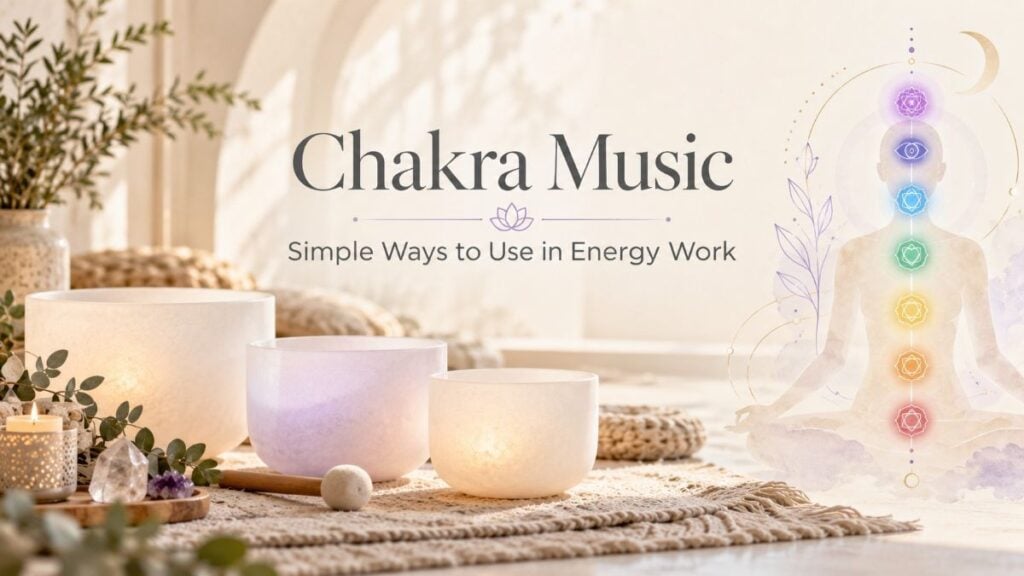
Chakra music brings sound into energy work in different ways. You might listen to singing bowls or choose music associated with a particular chakra.
As the music shifts from deeper tones to lighter sounds, it can guide your attention through the different energy centers. You might follow the sounds from the root chakra all the way through to the crown chakra.
Chakra music comes in many forms. Some tracks feature deep, steady sounds. Others use delicate chimes, flowing melodies or Solfeggio frequencies found in modern chakra music. Depending on the session, music may also include crystals, Reiki or chakra meditation.
In this guide, we’ll explore sounds associated with the seven chakras and simple ways to use them in energy work. We’ll also look at choosing music for a single chakra or a session involving all seven.
Key Takeaways
- Chakra music can include singing bowls, gentle melodies, chanting and ambient sounds used during chakra energy work.
- Each chakra has different traditional associations, which can help guide your choice of music for a session.
- Solfeggio frequencies and chakra mantras can both be used in chakra music, although they come from different origins.
- Crystals and Reiki can accompany music as optional parts of an energy work session.
- Focus on one chakra or all seven. Choose a short track for one energy center or follow a longer musical soundscape throughout the chakras.
What Is Chakra Music?
Chakra music is chosen or created to accompany practices focused on the body’s traditional energy centers.
Chakra teachings have roots in Indian yogic and Tantric traditions. These traditions included subtle-body practices involving chakras and channels known as nāḍīs. Their interpretations and practices have developed in different ways over time.
The familiar seven-chakra system places the energy centers from the base of the spine to the crown of the head.
Chakra music may feature singing bowls, soft strings, gentle drums, nature sounds or ambient tracks. Some recordings can include things like chanting or specific tones. Others provide a quiet musical background for visualisation or focused attention.
Chakra Music for the Seven Energy Centers
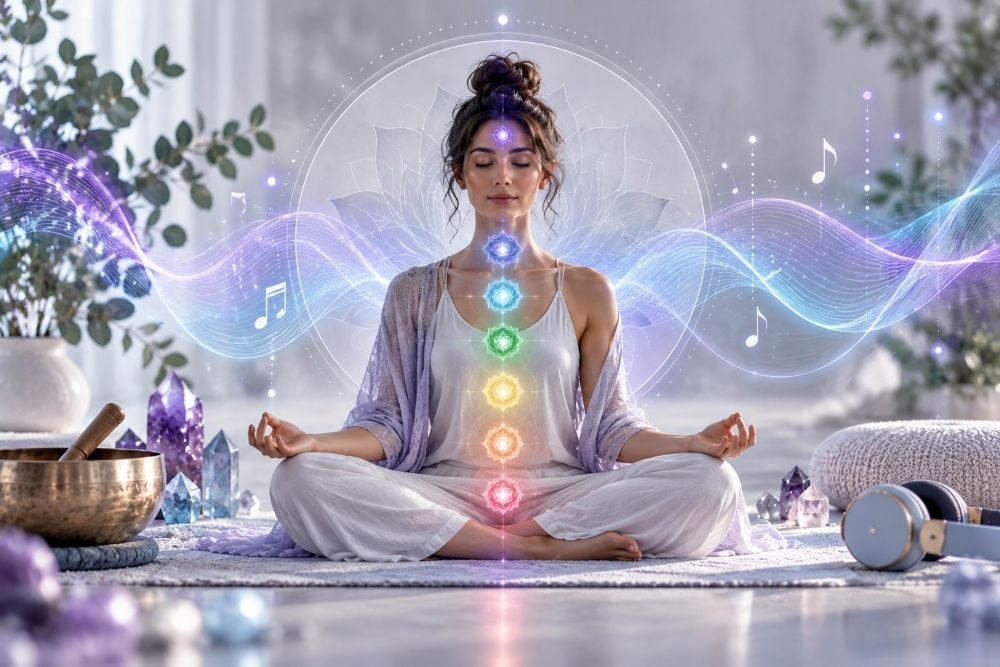
Chakra music for the seven energy centers can vary in tone, rhythm and style. Deeper sounds are often chosen for the lower chakras. Lighter chimes, singing bowls and spacious melodies are common choices for the upper chakras.
Modern chakra music blends several approaches to sound. Some tracks use instruments and chanting, while others feature ambient music or frequencies associated with individual chakras.
Here are some musical ideas to explore, beginning with the root chakra and moving towards the crown.
Root Chakra Music
Traditional focus: Stability, security and grounding
Sound ideas: Deep singing bowls, low drones and slow drum rhythms
Root chakra music often has a deeper, steadier character. A repeating drum rhythm or low singing bowl provides a clear sound to follow. It can accompany a practice focused on the base of the spine.
Sacral Chakra Music
Traditional focus: Creativity, emotions and flow
Sound ideas: Gentle strings, flowing water and soft melodies
Sacral chakra music can take on a more fluid quality. A track blending quiet water sounds with a gentle instrumental melody can accompany visualisation focused on the lower abdomen.
Solar Plexus Chakra Music
Traditional focus: Confidence, personal power and intention
Sound ideas: Warm acoustic tones, steady percussion and rhythmic melodies
Solar plexus chakra music can have a warm, purposeful character. Steady percussion or acoustic instruments create a defined rhythm while attention rests around the upper abdomen.
Heart Chakra Music
Traditional focus: Love, compassion and connection
Sound ideas: Soft strings, gentle bells and singing bowls
Heart chakra music often brings softer sounds into the practice. Sustained strings or the fading resonance of a singing bowl leave space between notes. These sounds can accompany a practice focused on the center of the chest.
Throat Chakra Music
Traditional focus: Communication and self-expression
Sound ideas: Clear chimes, humming and soft vocal tones
Throat chakra music may place more emphasis on the human voice. Humming, chanting or gentle vocal sounds can be especially fitting for a practice centred on expression and the throat area.
Third Eye Chakra Music
Traditional focus: Intuition and inner awareness
Sound ideas: Sustained tones, spacious ambient music and singing bowls
Third eye chakra music often has fewer rhythmic elements and more space between sounds. Long, sustained notes create a quiet soundscape for visualisation focused on the area between the eyebrows.
Crown Chakra Music
Traditional focus: Spiritual connection and awareness
Sound ideas: Light chimes, airy ambient tones and resonant singing bowls
Crown chakra music often uses lighter sounds with plenty of space around them. Slowly fading chimes or singing bowls can accompany attention to the crown of the head and moments of stillness.
For more ideas about this energy center, explore music for crown chakra meditation.
Solfeggio Frequencies and Mantras in Chakra Music
Chakra music can include recorded frequencies and traditional chanting. Solfeggio frequencies appear in contemporary wellness playlists. Bija mantras are short seed syllables used in yogic and Tantric practices.
Both bring different qualities to chakra-focused sound sessions.
Solfeggio Frequencies in Chakra Music
Solfeggio frequencies often appear as numbers in chakra music titles. A recording made for root chakra practice might feature 396 Hz. Music intended for the crown chakra may instead use 963 Hz.
These frequency associations are part of contemporary chakra music. You might even find that some playlists pair different tones with the same energy center.
When choosing chakra music, start with the chakra you’d like to focus on. Then explore tracks created for that energy center. Choose a sound you resonate with. It might feature instruments you already enjoy, such as singing bowls, gentle drums, soft strings or chimes.
Chakra Mantras and Chanting
Chakra mantras introduce the human voice into a sound-focused practice. Some recordings feature repeated bija syllables, while others combine chanting with gentle instruments.
Common examples include Yam, associated with the heart chakra, and Lam, linked with the root chakra. Om is also frequently used in practices focused on the third eye.
These sounds may be heard in a recording or chanted during the session itself.
Chanting aloud makes the voice an active part of your session. This brings in a different experience from listening to recorded tones or instrumental music.
Three Simple Ways to Use Chakra Music in Energy Work
Here are three simple ways to bring chakra music into your energy work sessions. The music can become the main focus for one chakra or guide attention through all seven. It can also play quietly in the background during Reiki or crystal work.
1. Focus on One Chakra with Music
Focusing on one chakra with music lets you choose sounds that reflect the traditional themes of that energy center.
For a heart chakra session:
- Sit or lie somewhere comfortable.
- Play a gentle track perhaps with singing bowls or soft strings.
- Bring your attention to the center of your chest.
- Visualise the green colour traditionally associated with the heart chakra. Or you might prefer to picture soft pink as a symbol of loving energy.
- Listen to how the notes rise, fade and leave space between each sound.
For another chakra, change the music, area of focus and visualisation to match the energy center you’re exploring.
2. Move Through All Seven Chakras With Music
Using music across all seven chakras lets the sound change as your attention moves through each energy center.
Begin with deeper tones while focusing on the root chakra. From there, shift your attention to the sacral and solar plexus chakras before reaching the heart.
Continue with the throat and third eye, finishing with lighter sounds for the crown chakra.
A playlist can introduce a different musical texture for each part of the session. A continuous soundscape offers another option, with fewer breaks as your focus changes.
When you reach the end, let the final notes fade naturally. A brief pause in silence can mark the close of the session.
3. Combine Chakra Music with Reiki or Crystals
If you enjoy using Reiki or crystals, combining them with chakra music can make an energy work session feel more immersive.
During Reiki, soft instrumental music can create a background soundscape while the Reiki practice remains the focus.
Crystals can add a visual or symbolic element. In crystal traditions, rose quartz is commonly associated with the heart chakra. It might be placed nearby during a heart-focused practice centred on compassion or connection.
Our guide to chakras and crystals explores these traditional crystal associations in more detail.
How to Choose Chakra Music That Suits Your Practice
Choosing chakra music for your session starts with the type of sound, length and pacing that suit your session.
Music for one chakra may sound quite different from a longer recording intended for all seven.
A 2025 review of sound interventions examined 34 studies involving music and other sounds. It highlighted how sound choices, listening conditions and individual preferences can influence the listening experience.
When choosing a track, you might want to consider things like:
- Sound: Singing bowls, chanting, nature sounds and gentle instruments. Each creating a different soundscape.
- Volume: Keep the music low enough that it supports the practice rather than dominates it.
- Length: A short track can suit one chakra, while a longer piece or playlist can accompany all seven.
- Pacing: Slow transitions and sustained tones give you time to focus on each energy center.
You can also change tracks as the focus of the session changes. A deeper, rhythmic piece might accompany the lower chakras. Lighter or more spacious sounds could follow as attention moves towards the upper chakras.
FAQs About Chakra Music
Are Headphones Necessary for Chakra Music?
Headphones aren’t necessary for listening to chakra music. You can use either speakers or headphones, depending on the experience you’d like to have.
Speakers allow the music to fill the environment around you. Headphones can create a more immersive listening experience. They can also make it easier to notice quieter details, such as gentle chimes, singing bowls or subtle changes in tone
How Long Should You Listen to Chakra Music?
A chakra music session can last a few minutes or extend across several energy centers.
Approximately 5 to 15 minutes can be a practical starting point for focusing on one chakra. A longer track or playlist can accompany a session involving all seven.
The length can also depend on the music itself. Some recordings have natural pauses or changes that make convenient points to finish or shift attention.
Can Chakra Music Be Used During Yoga?
Chakra music can be a natural addition to yoga, particularly during a practice focused on the energy centers.
Steady instrumental music can accompany flowing movements or longer-held poses. For a chakra-focused session, you could also choose music associated with the particular chakra you’re exploring.
Final Thoughts on Chakra Music for Energy Work
Chakra music can bring different sounds into energy work. These might include singing bowls, chanting, gentle melodies, ambient tones or modern Solfeggio music.
Reiki, crystals and visualisation can also be combined with the music to create different experiences.
For your next session, try choosing one chakra and finding music you resonate with most. This gives you a simple starting point for exploring different sounds and styles within your practice.
If you’d like to understand a little more about the frequency numbers you see in chakra music playlists, here’s our beginner’s guide to Solfeggio frequencies. It explains what these tones are, where they come from and how they’re used in modern wellness music.