

Have you ever pictured what you’d like your future self to have and be like a few months or even years from now?
Future self journaling gives you a space to explore that idea through writing. You can think about the goals you’d like to work towards, the values you want to hold onto and the person you hope to become.
In this simple guide, we’ll explore what future self journaling is and how you can practise it.
What Is Future Self Journaling?
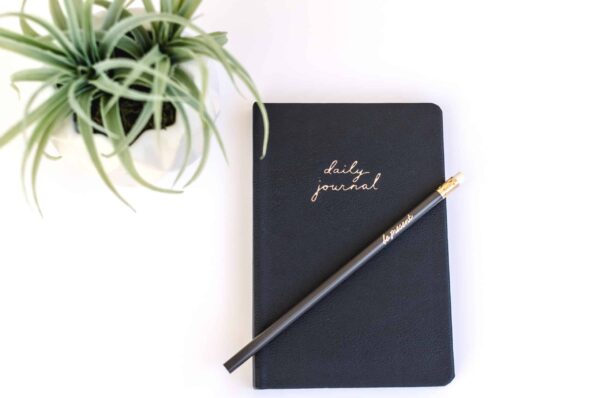
Future self journaling is a writing practice that invites you to think about your future self.
You might write about the person you would like to become, the life you would like to build or the goals you hope to work towards.
One approach is to write a letter to your future self. You can describe where you are now, what you hope will change and what you would like to remember when you read it later. In that sense, it can be a little like creating a time capsule in words.
The practice can focus on the near or distant future. You might picture yourself a few months from now or several years ahead. You can also use it to consider how your everyday choices relate to the direction you want to take.
Rather than trying to predict exactly what will happen, future self journaling is about exploring possibilities. Writing them down can give you a clearer picture of what you value, what you want to work towards and how you see your future.
What Can You Write in a Future Self Journal?

Writing a future self journal is not very different from regular journaling. The main difference is where you place your attention. Instead of focusing only on what is happening now, you also consider where you would like to be heading.
Start by choosing one goal or area of life to explore. Keep it simple. You could write it as a short statement on the first page of your journal.
From there, you can use different approaches at different times. You might write about:
- Your future self: What would you like your life to look and feel like?
- Your goals: What would you like to work towards?
- Your habits: What small changes could support your direction?
- Your progress: What have you tried so far? What might you adjust?
- Your self-talk: How would the future version of you speak to yourself?
You can also write letters between your present and future self. Ask what you would like your future self to know, or imagine what advice they might offer you.
Your timeframe can be as short as tomorrow or next week. You can also look several years ahead. Keeping some attention on smaller, practical steps can help turn a broad vision into something you can explore in everyday life.
The idea is to use writing to explore where you would like to go and what that direction means to you.
What Are Some Questions to Ask Your Future Self?

Questions can give your journaling session a clear starting point. They can also help you explore what you want, what matters to you and how you see your future.
Try imagining that you are having a conversation with your future self. What would you genuinely like to know?
You could ask:
- What would I like to have achieved by then?
- Which habits would I like to have developed?
- What would an ideal day look like?
- What would I like to feel more of?
- What might I wish I had started sooner?
- What could I focus on today?
- What would my future self want me to remember?
- What challenges might I need to work through?
- What would a more confident version of me do in this situation?
You can also use visualisation as part of the exercise. Picture a day in your future and describe what you see, where you are and how you feel.
The answers do not need to be predictions. Think of them as prompts for exploring possibilities. They can help you consider what you want your future to look like and what feels important to you now.
How To Make The Most Out Of Future Self Journaling
A few simple ideas can help you keep your future self in mind and remember what inspired you to start.
Make it work for your routine.
You do not need to journal every day. Choose a frequency that feels realistic for you. Missing a session is not a reason to give up.
Keep your future in sight.
You could create a vision board alongside your journal. Include images, words or ideas that represent the future you are working towards. Keep it somewhere you will see it regularly.
Review your direction.
Your goals and priorities can change. Revisit your journal from time to time and consider whether your vision still feels right for you.
Think about small steps.
A big future goal can feel distant. Break it down into smaller actions that fit into your everyday life. This gives you something practical to work with now.
Leave room for change.
Your future self does not have to look exactly as you imagined. Let your ideas develop as you learn more about yourself and what you want.
Looking for a journal to get started? Explore the variety of life planners you can choose from.
How Do I See My Future Self?

Considering how you see your future self can be a useful exercise.
It is easy for long-term goals to get pushed aside when day-to-day life gets busy. Keeping your future self in mind can give you a reason to pause and think about where you would like your choices, habits and actions to take you.
Your future self can give you a way to imagine the person you would like to become. Think about your passions, ambitions and the experiences you would like to have. What would you like your life to feel like? What would you like to be doing, creating or exploring?
This kind of imagination can bring your longer-term hopes into focus. You can picture yourself tomorrow, next year or further into the future and consider what that version of you might value, enjoy and pursue.
Your vision can change over time. That does not make it less meaningful. Your priorities and circumstances can change too, giving you new things to consider.
Future self journaling offers one way to stay engaged with these ideas.
Why not give it a try and see what you discover about your future self?
King, L. A. (2001). The Health Benefits of Writing about Life Goals. Personality and Social Psychology Bulletin, 27(7), 798–807. https://doi.org/10.1177/0146167201277003
Hiemstra, Roger. (2001). Uses and benefits of journal writing. New Directions for Adult and Continuing Education. 2001. 19 – 26. 10.1002/ace.17.